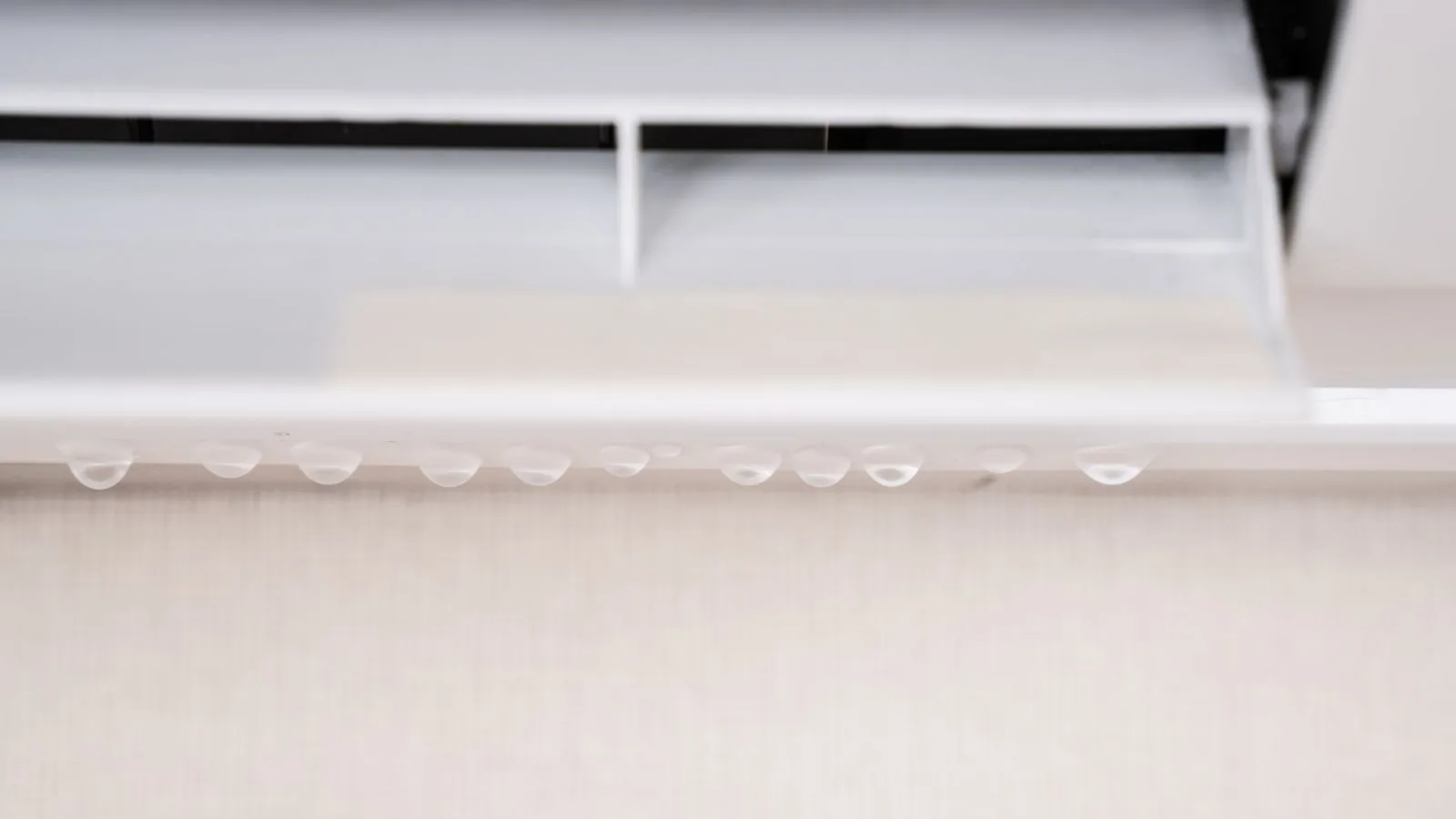
AC leak water damage is the wet ceiling, insulation or closet floor left when an air handler, evaporator coil or condensate drain overflows. Air conditioners remove moisture from the air as they cool, and that water has to drain somewhere. When the drain clogs, the water finds a different path, and it usually goes through the ceiling below or into the floor of a closet.
If you see water at the unit, switch off the system at the thermostat and at the air handler. Wipe up what you can, set a bucket under any drip, and call an HVAC technician to clear the line. Our work starts when the leak is stopped.
Signs of an AC leak in your home
- A brown stain or damp patch on a ceiling below an air handler.
- Water in the overflow pan or on the floor of an air handler closet.
- Musty smell around a vent or return.
- A wet or swollen baseboard near the unit.
- A system that shuts off by itself because a float switch has tripped.
Why condensate leaks happen
Algae and debris collect in the condensate drain and slowly choke it. A cracked pan, a loose connection or a frozen evaporator coil that melts in a rush will add to the water. Attic air handlers are the worst case, because a leak soaks insulation and ceiling drywall before anyone sees it.
Connecticut summers are humid enough to put the system to work, so the drain carries water for much of the season. A float switch is the safeguard that shuts the unit off when the pan fills, and it only works if it was installed and tested.
How we handle the wet structure
We scan with a thermal camera and read moisture around the unit and in the ceiling below. Wet insulation is removed and the cavity is dried with air movers and a dehumidifier. Ceiling repair follows if the board is soft or stained, which is covered under ceiling water damage repair.
We do not clean or repair the HVAC system itself. An HVAC contractor should clear the drain, test the pan and switch, and check the coil. Drying and the mechanical fix together stop the cycle.
Industry reference
Condensate from a cooling system can carry microbes from the drain pan, so the ANSI/IICRC S500 standard asks that the category be considered before drying. Following that guidance keeps a small drip from turning into a hidden mold problem.
What to do before help arrives
- Turn off the air conditioner at the thermostat and the breaker.
- Keep people away from wet ceiling areas that sag.
- Place a bucket under active drips and move belongings.
- Do not run the system until the drain line is cleared.
- Call a heating and cooling contractor for the repair.
Wet ceiling under the air handler?
Switch the system off and call us for moisture mapping and drying. We explain scope and price first.
A mold note for humid cavities
A cavity that stays damp for weeks can grow mold. That does not happen to every leak, and we make no health claims here. We read moisture first, dry quickly, and refer you to mold remediation if visible growth appears.
Mold needs moisture, so correcting the leak and drying the structure is the first defense. Testing and removal follow the published ANSI/IICRC S520 standard.
Prevention that actually helps
| Step | What it does | Who does it |
|---|---|---|
| Drain line flush and inspection | Keeps the condensate line clear | HVAC contractor |
| Float switch in the pan | Shuts the system off when the pan fills | HVAC contractor |
| Secondary pan with drain | Catches overflow from the main pan | HVAC contractor |
| Regular filter changes | Reduces coil icing and dirt in the drain | Homeowner |
What affects the cost of repair
- How long it leaked. Weeks of seepage reach more material than a single event.
- Material involved. Attic insulation, ceiling board and closet flooring each differ.
- Location of the air handler. Attics and tight closets slow access.
- Drying time. Equipment runs until readings are dry.
- Repair scope. Ceiling patching and painting are priced separately.
General note on insurance: coverage for ongoing seepage varies, and many policies treat slow leaks differently from sudden ones. Check your policy. Want your real number? Call (914) 732-9604.
Questions about AC leak damage
Damp insulation and board can grow mold if they stay wet. Quick drying lowers the risk, and we recommend a visual check and moisture readings.
An HVAC contractor. We dry and repair the structure, and your HVAC contractor stops the leak.
It depends on whether the event was sudden and what your policy says about gradual leaks. Ask your insurer.
A moisture reading in the board and the insulation above it. A stain can look dry while the cavity is still wet.