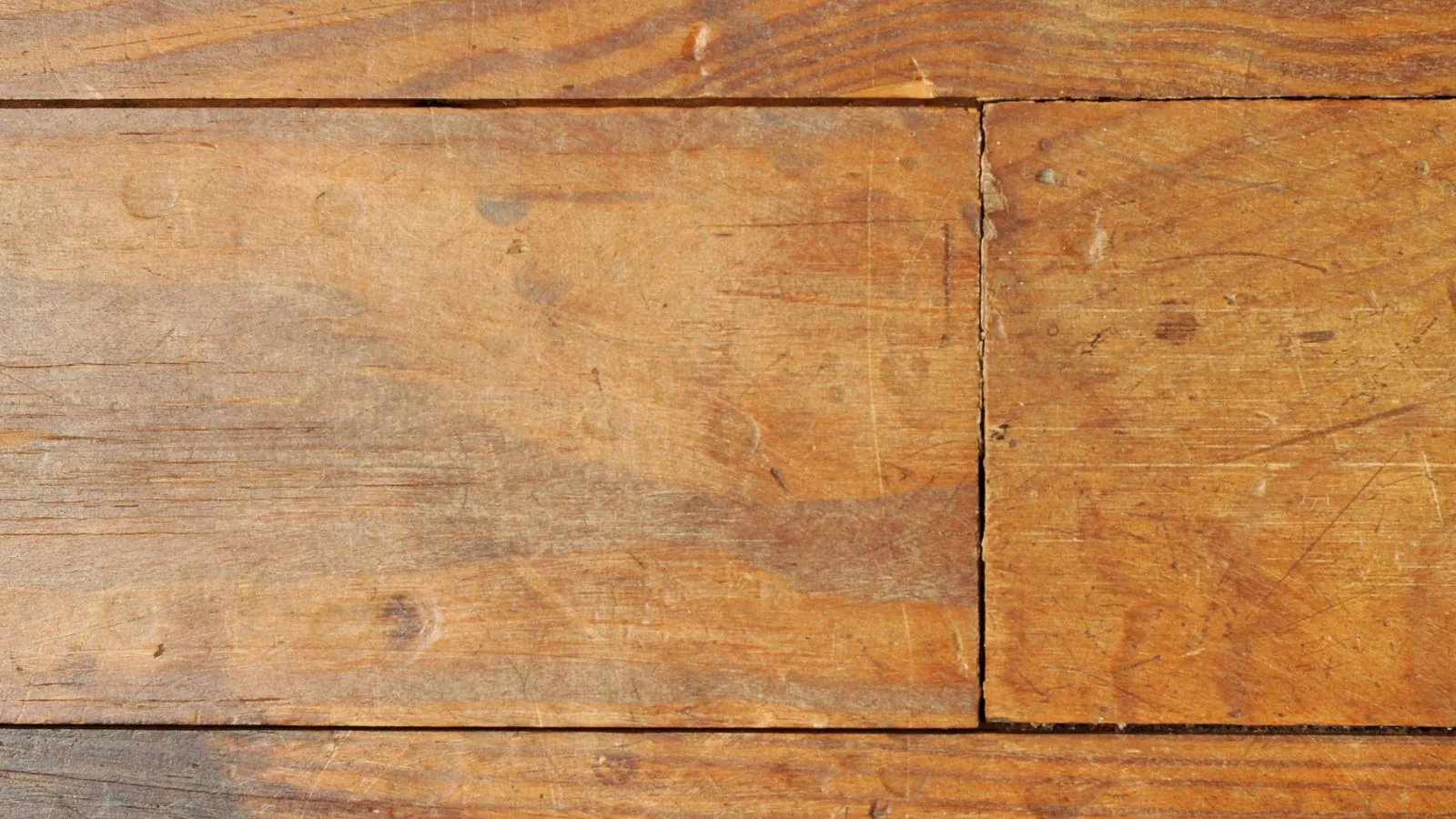
Hardwood floor water damage repair is the process of drying wet boards and subfloor and then deciding whether to refinish, repair or replace them. Wood absorbs water and swells, and the first sign is usually cupping, where board edges rise higher than the centers. Fast drying with the right equipment saves many floors, while slow or uneven drying causes permanent warping.
Mop up surface water, lift rugs and furniture, and keep shoes off the floor. Do not sand, refinish or use heat to speed drying, because that can seal in moisture and crack boards.
How water changes a hardwood floor
| Sign | What it means | Typical next step |
|---|---|---|
| Cupping | Bottom of the board is wetter than the top | Dry slowly, wait, then sand if flat |
| Crowning | Top dried faster than the bottom after cupping | Sand after readings stabilize |
| Buckling | Boards lift off the subfloor | Often replaced in the lifted area |
| Dark stains or black marks | Long exposure or mold | Replace or refinish after drying, depending on depth |
| Gaps between boards | Boards shrank after drying | Monitor, then fill or refinish |
Engineered and laminate floors behave differently. Laminate swells at the edges and often cannot be saved, while engineered wood depends on the thickness of its top layer. We identify the type before choosing a method.
Drying hardwood without damaging it
We start by extracting water, then place floor drying mats and low-profile equipment that pull moisture out through the boards. Air movers and dehumidifiers condition the room, and moisture meters track each area. Drying too fast can crack the boards, so the process is monitored and adjusted.
If water has gotten under the floor, removing a few boards or drilling small ports may let air reach the subfloor. These repairs are small compared with replacing the whole floor, and they are worth considering when readings stay high.
Industry reference
The ANSI/IICRC S500 standard recognizes that dense materials such as hardwood dry slowly and call for monitoring over several days. Guidance for specialty drying of wood floors is part of that standard, and moisture readings drive the decision to dry in place or replace.
Hardwood floor wet or cupping?
Call for moisture readings and a drying plan. We explain scope and price before work starts.
Local note for Greenwich homes
Many Greenwich houses from the 1950s onward have hardwood laid over plank or plywood subfloors. A water event that reaches the subfloor takes longer to dry, and finished basements below add a second wet surface. Census data lists a median build year of 1957 in ZIP 06830 and 1971 in ZIP 06831.
We read moisture from above and, where we can, from below, because a floor that is dry on top may be wet underneath. Older boards can often be refinished once dry, and the call depends on how long the wood stayed wet.
Repair, refinish or replace
- Refinish when cupping flattens after drying and readings are stable.
- Spot-repair when only a few boards are buckled or stained.
- Replace the section when boards are delaminated, moldy or readings never normalize.
- Wait for moisture content to stabilize before sanding.
For the drying side of the job, see structural drying and dehumidification. If a carpeted room is next to the wood floor, carpet water damage restoration applies to the carpet.
What affects the cost
- Species and finish. Solid, engineered and laminate floors differ.
- Area affected. More rooms and a wider wet zone need more equipment.
- Time wet. Longer contact means more swelling.
- Drying days. Equipment stays until readings are stable.
- Refinishing scope. Sanding and finishing are separate from drying.
General note on insurance: sudden leaks are often covered, while long seepage often is not. Photograph the floor before drying. Want your real number? Call (914) 732-9604.
Questions about hardwood floor water damage
Often, yes. If the floor dries slowly and evenly, cupping can flatten and the floor can be sanded and refinished.
Wait until moisture readings are stable and match the rest of the house. We measure rather than guess.
Rarely. Laminate swells at the edges, and the core does not recover. We tell you which areas are worth drying.
Often yes. Removing them lets air reach the wall base and the edge of the floor, where water collects.