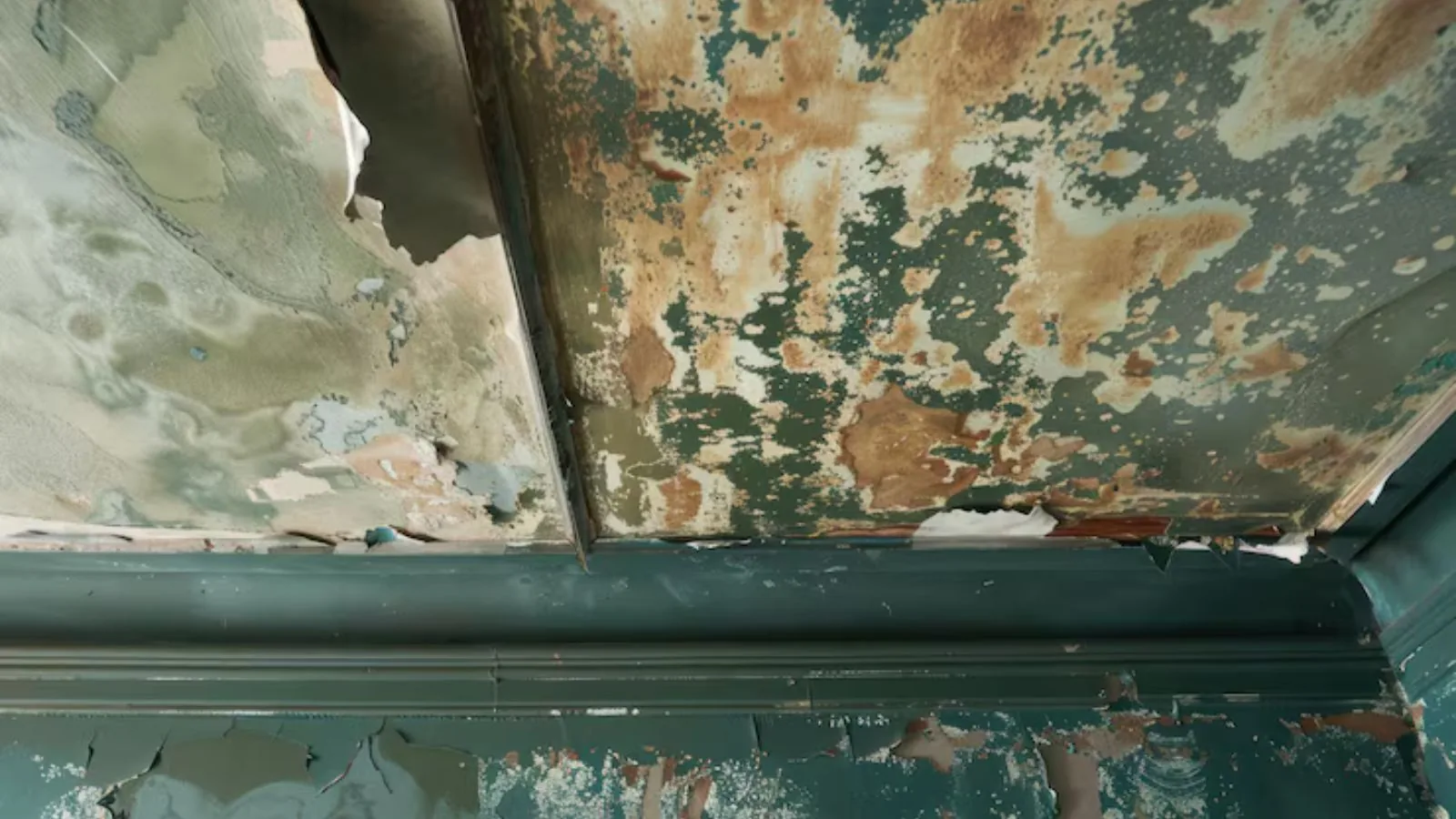
Wall and drywall water damage repair is the drying and repair of wet gypsum board, plaster, baseboards and the cavity behind them. Drywall wicks water upward like a candle wick, so the stain at the bottom of a wall is often smaller than the damage inside. The work starts with moisture readings and ends with a clean, finished wall.
Take baseboard trim off wet walls if you can and pull furniture away so air can circulate. Do not paint over a stain or seal a wet wall, which traps moisture and can lead to mold.
Signs of water inside a wall
- Bubbling, peeling or discolored paint.
- Soft or crumbling board when pressed.
- Swollen baseboards or door casings.
- A musty smell, or a wall that feels cool and damp.
- A stain that returns after painting.
Water damage on baseboards and lower walls
Baseboards and lower walls are the first place water shows up after a floor leak. Water reaches the wall base from appliances, supply lines and floods, then wicks up gypsum board. A baseboard that gaps from the wall or swells at the bottom is a sign the board behind it is wet.
We remove the trim and often cut a small strip of board near the floor so the cavity can dry. This is usually cheaper than waiting and replacing the entire wall later.
Dry, cut or replace
| Condition | Approach | Reason |
|---|---|---|
| Dry reading, intact paint | Sand, prime and repaint | No wet material remains |
| Wet but firm board, short exposure | Open and dry the cavity | Board may dry in place |
| Soft, crumbling or moldy board | Cut out to dry framing | Gypsum loses strength when wet |
| Wet insulation in the cavity | Remove and replace | It does not dry reliably |
| Plaster wall | Dry, test, patch or re-skim | Heavier and harder to match |
Cuts are made above the visible stain line at the nearest stud for a clean patch. Readings decide how high the cut goes.
How moisture mapping guides the repair
A thermal camera scans the wall and a moisture meter confirms readings at points above and below the stain. We mark the wet boundary and check it again the next day. Drying equipment is placed to move air across the open cavity, and readings confirm when the wall is ready to close.
Mapping is covered in more detail under structural drying and dehumidification. For the plumbing source of many wall leaks, see burst pipe cleanup.
Industry reference
The ANSI/IICRC S500 standard calls for removing and replacing wet porous materials when they cannot be dried properly, and it uses moisture readings against a dry reference to decide. For drywall, that often means cutting a clean line above the wet area and drying the cavity before closing it.
Wall wet or stained?
Call for moisture mapping and a drying plan. We explain scope and price before work starts.
Finishing the repair
After drying, the patch is taped, mudded and sanded. Primer seals the surface, and paint and texture are matched as closely as possible. Matching an older plaster texture or a faded wall takes the most skill.
Plan for a full wall repaint if the color is faded. A patch that is painted alone often shows. Ceilings that took water from above are handled in ceiling water damage repair.
Local note on Greenwich walls
Greenwich includes plaster and lath in older houses, drywall in later construction and many walls that were opened and rebuilt over time. Census data lists a median build year of 1957 in ZIP 06830. We identify the wall type before we choose a drying plan.
We serve walls across ZIPs 06830, 06831 and 06836, from Greenwich Avenue to Riverside and Old Greenwich.
What affects the cost
- Wall height wet. A short wicking strip versus a full wall.
- Material. Drywall, plaster and paneling differ.
- Insulation. Wet insulation is removed and replaced.
- Drying days. Equipment stays until readings are dry.
- Finish. Texture and paint matching add work.
General note on insurance: coverage for sudden leaks is common, and long seepage often is not. Photograph the wall before cutting. Want your real number? Call (914) 732-9604.
Questions about wall and drywall water damage
Moisture readings and firmness tell us. Firm board that reads dry after treatment often stays.
Gypsum wicks water upward. The visible stain is only part of the wet area.
We handle the drying and the drywall repair and can discuss finishing as part of the scope. A painter handles final color matching if you prefer.
It can when a cavity stays wet. Fast drying helps, and we make no health claims.