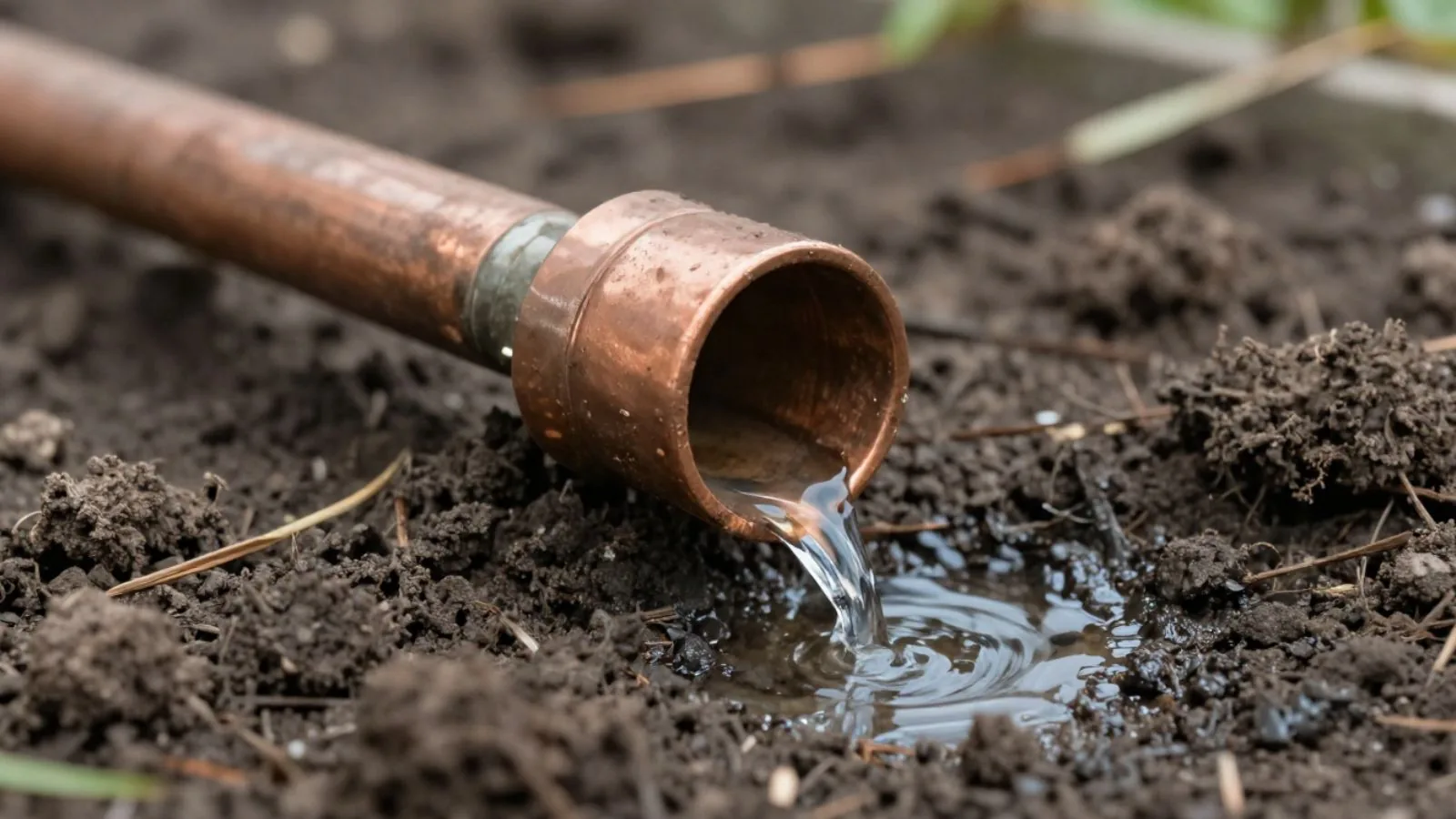
Frozen pipe water damage is the flooding that follows when ice inside a supply line cracks the pipe, then melts and lets water pour out. Because the break can happen while pipes are still frozen and show itself only at thaw, a quiet house can flood in minutes. Our line takes emergency calls 24/7 in Greenwich, including during a cold snap when everyone is calling.
If a pipe has split, close the main valve first, then open the faucet nearest the break so remaining water can drain. Do not use an open flame to thaw a pipe, and keep power off any wet circuit you cannot safely reach.
Frozen pipe emergency: stop the water, then call
Water appearing at a ceiling, a wall or the floor beneath an exterior wall after a freeze is an emergency. The pipe may still be partly frozen, so water can start and stop. Shut the main valve even if the leak looks small, because a thaw can turn a drip into a flood.
Pipes in garages, attics, outside-facing kitchen walls and unheated utility rooms are the usual suspects. Connecticut winters can freeze any line that has little insulation or loses heat.
Where Greenwich homes are exposed
Older houses in Glenville, Banksville and Chickahominy often have added rooms, porches or garages that put supply lines in cold spaces. A cold exterior wall behind a kitchen sink or a bathroom vanity is a classic location. Large homes left unheated during a winter trip are another.
Ice on the pipe is sometimes visible as frost on the pipe surface or a bulge in the line. A faucet that runs slow or not at all in freezing weather points to a frozen section, and the split may be a few feet away from where the ice sits.
How we handle the aftermath
- Water off. Confirm the main valve is closed and the system is drained.
- Extract. Remove standing water from floors, carpet and the base of walls.
- Map. Moisture meters and thermal imaging trace water inside the wall, ceiling and floor.
- Open and dry. Cut back wet drywall where needed, then run air movers and dehumidifiers.
- Verify. Daily readings confirm the framing is dry before closing anything up.
Industry reference
The ANSI/IICRC S500 standard defines drying goals by comparing wet materials with an unaffected dry reference. After a pipe thaws and floods a wall, those readings decide when equipment can come out, not how the surface feels.
Pipe split and thawing?
Shut the main valve and call the 24/7 line. We explain scope and price before work starts.
Thawing safely and what to avoid
- Do not use torches or open flames on a frozen pipe.
- Use a hair dryer or warm towels on an exposed section only after the main valve is closed.
- Keep cabinet doors open on exterior walls so warm air reaches the pipes.
- Do not ignore a trickle. A small leak at a thaw can turn into a larger split.
What decides how much gets dried and how much gets replaced
Water that ran for a short time in a lower wall often dries with drywall cut back a few inches. A split in an upper floor can soak ceilings below and run down through light fixtures, which brings in ceiling water damage repair. A break that soaked insulation usually means insulation removal.
Plan on a plumber for the pipe itself. We handle the water and the drying, and the order matters. Fix the pipe, dry the structure, then rebuild.
What affects the cost
- How long it ran. Minutes of flow versus hours changes the material involved.
- Location of the split. Upper floors spread water through multiple levels.
- Insulation and finishes. Wet insulation is removed, and plaster or drywall may be cut.
- Equipment days. Air movers and dehumidifiers stay until readings are dry.
- Rebuild scope. Repairs follow the water cleanup as a separate step.
General note on insurance: sudden pipe breaks from freezing are often covered, while damage from neglect may not be. Keep photos and receipts, and check your policy. Want your real number? Call (914) 732-9604.
Questions about frozen pipe damage
Yes. The line is open 24/7, and cold-weather calls are answered the same way. Tell us where the water is coming from and whether the main valve is closed.
A hair dryer or warm towels on an exposed section is the safe approach, after the main valve is closed. Never use a torch. If the pipe is inside a wall, call a plumber.
A split pipe is repaired or replaced, and the cause is usually cold exposure. Insulation, heat tape and keeping heat on while away reduce the risk, but we do not promise a result.
Moisture readings in the framing and a thermal image are the check. Dryness you can see on the surface does not tell you what is inside.