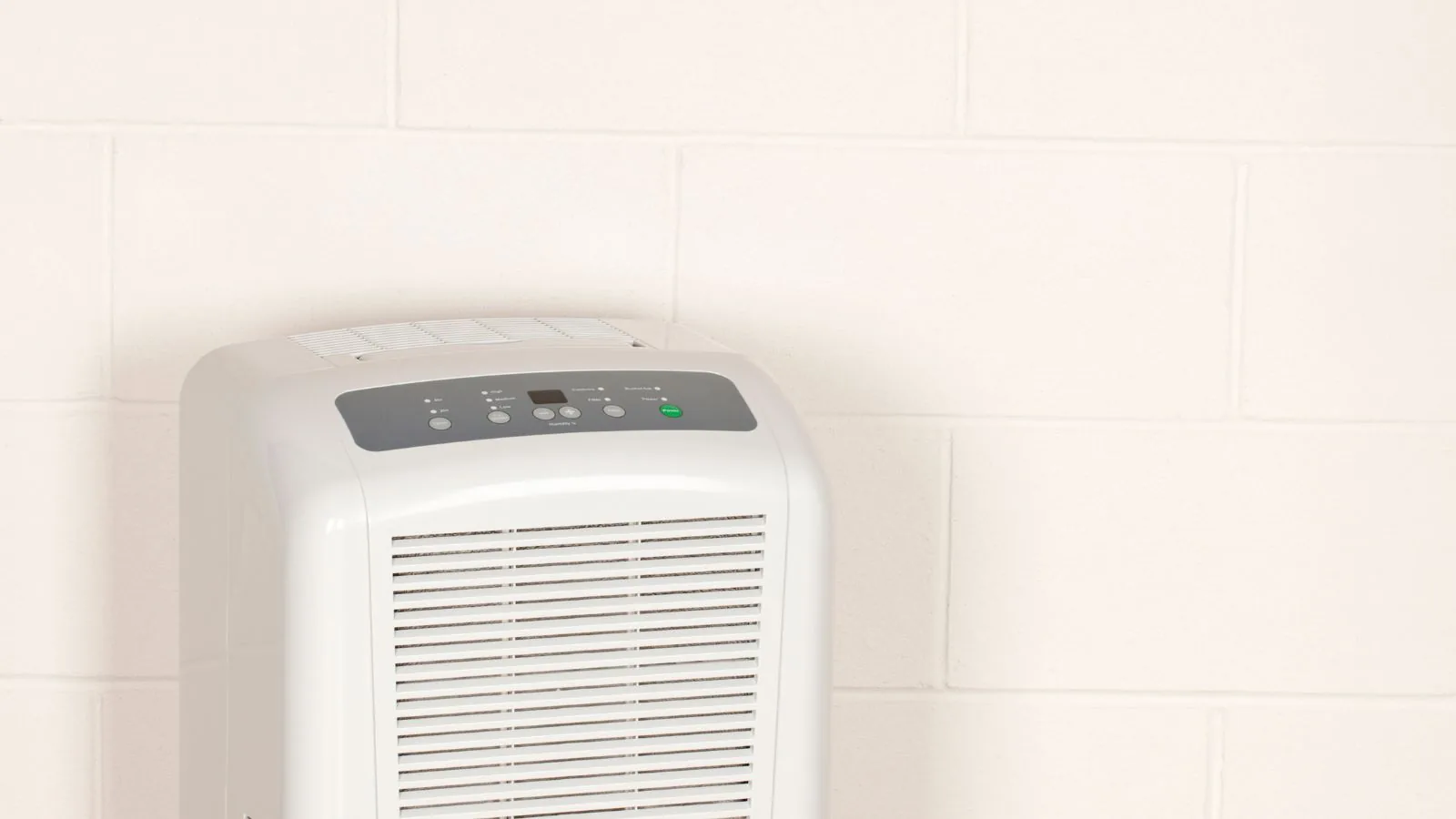
Structural drying and dehumidification is the controlled removal of moisture from framing, subfloors, walls and ceilings using air movers, low-grain refrigerant dehumidifiers and daily readings. It is the stage that follows water extraction and decides whether a house is truly dry or only looks dry. We work to the ANSI/IICRC S500 water damage restoration standard as a published guide.
If you cleaned up a leak a few days ago and the floor still feels cool, the wall is cold to the touch or the room smells musty, the structure may still hold water. A moisture reading answers the question in minutes.
Floor still damp or walls cold days after the water was cleaned up?
That is how most homeowners describe a wet structure before they know the trade name for the fix. Water soaks into materials that hold it, such as subfloor plywood, framing, insulation and the back of drywall. Mopping and fans get the surface dry but rarely the core.
Structural drying is the process of removing that stored water on purpose. It uses airflow to move moisture off surfaces and dehumidifiers to take it out of the air, with readings to prove progress.
Moisture mapping: finding where the water went
Moisture mapping is a room-by-room survey of readings taken with pin and pinless meters and a thermal camera. Each reading is marked, often directly on the wall, so the same spot can be checked the next day. The map shows the wet boundary and guides where to cut, where to place air movers and where drying is complete.
It also protects you. Readings before and after give a record you can share with your insurer, and they show when drying is finished instead of leaving it to a guess. Walls, floors and ceilings are all mapped, and a hidden pocket often turns up behind a cabinet or under a floating floor.
How a drying job runs
- Set the goal. Readings from dry reference materials in the same home set the target.
- Place equipment. Air movers aim across wet surfaces and dehumidifiers condition the room.
- Control the space. Doors and vents are closed so humid air does not spread.
- Check daily. Readings and room conditions are logged, and equipment is moved as areas dry.
- Confirm and remove. When every reading reaches the goal, equipment leaves.
Industry reference
Drying goals in the ANSI/IICRC S500 standard are set by comparing wet materials with an unaffected dry reference. Daily readings show when the structure reaches that goal and equipment can come out.
What to do while equipment runs
- Keep equipment running and do not move it.
- Keep doors and windows closed unless the crew says otherwise.
- Do not turn off dehumidifiers to save power.
- Keep pets and children away from cords and hoses.
- Report new stains or smells right away.
Not sure the structure is dry?
Call for moisture readings and a drying plan. We explain scope and price before work starts.
Equipment and what each piece does
| Equipment | Job | Notes |
|---|---|---|
| Air movers | Move air across wet surfaces to evaporate moisture | Placed to dry floors and walls |
| LGR dehumidifiers | Remove moisture from the air at low humidity | Essential in humid Connecticut summers |
| Desiccant units | Dry at very low temperature or humidity | Used in special conditions |
| Wall cavity ports and mats | Push air into closed cavities and under floors | Saves material when conditions allow |
| HEPA air scrubbers | Filter particles in the air during demolition | Used when dust or contamination is a concern |
How drying time is decided
Drying time depends on the materials, how much water they absorbed and the room conditions, so it varies from a few days to longer. Dense materials such as hardwood and plaster dry slowly. A drywall wall with an open cavity dries faster than one boxed in with cabinets.
Related drying work appears on our pages for hardwood floors, walls and drywall and carpet.
What affects the cost
- Area and number of rooms. More surfaces mean more equipment.
- Materials. Hardwood, plaster and subfloor take longer than carpet and drywall.
- Drying days. The days equipment runs and is monitored.
- Water category. Contaminated water adds steps before drying.
- Access. Closed cavities may need openings or ports.
General note on insurance: drying records support a claim, and the insurer decides coverage. Ask your insurer what documentation it wants. Want your real number? Call (914) 732-9604.
Questions about structural drying
Call for moisture readings. A damp feel after cleanup often means the subfloor or framing still holds water, and equipment can finish the job.
It varies with materials, the amount of water and room conditions. We measure daily and keep equipment until readings reach the dry goal.
For a small damp spot it can help. For a wet structure, commercial LGR units and air movers dry faster and are monitored.
Faster drying lowers the risk, but we do not promise any result. Mold needs moisture, so removing it is the best defense.