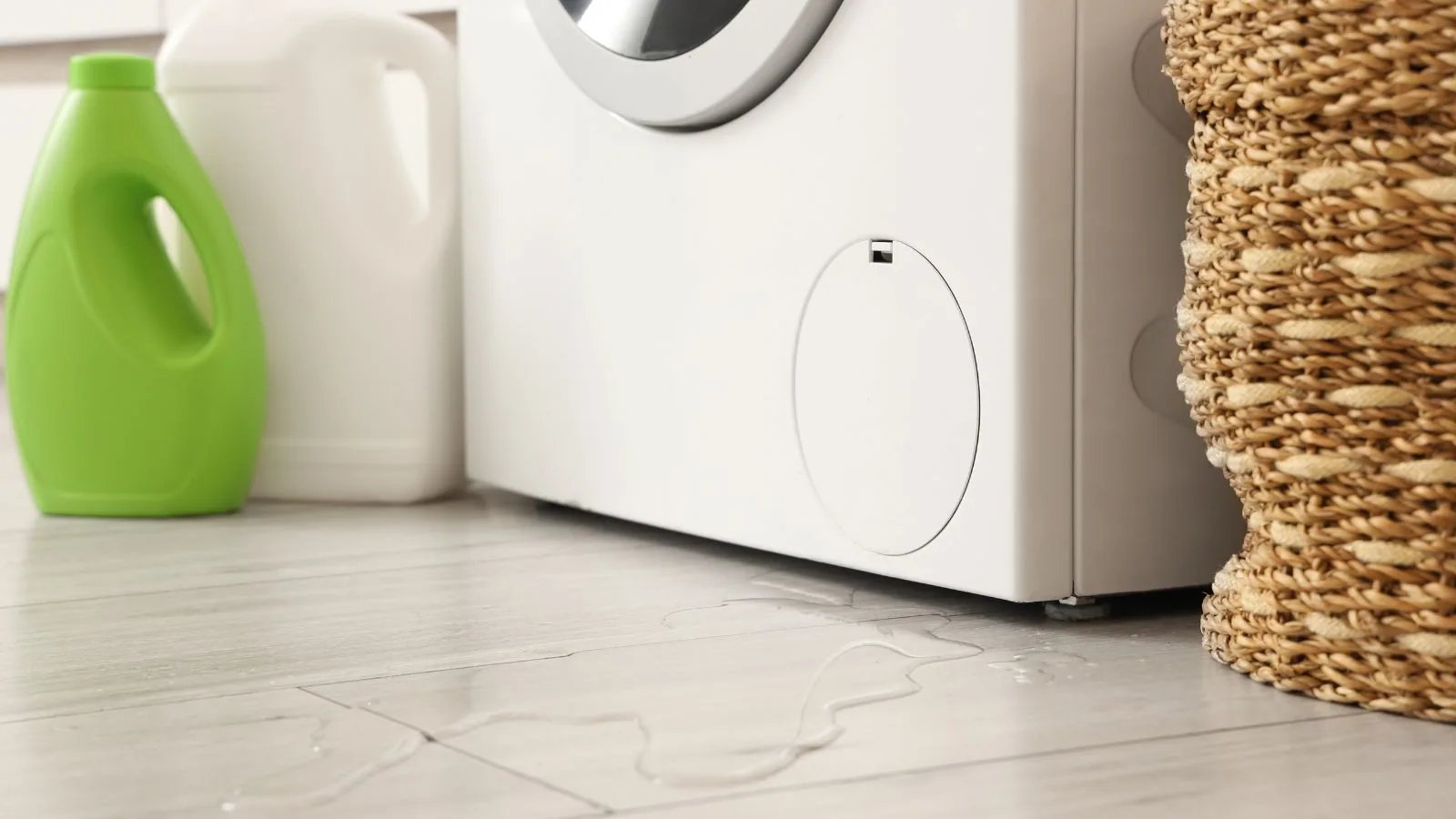
Appliance leak water damage is the wet flooring, cabinetry and drywall that results when a washing machine, dishwasher, refrigerator or similar fixture leaks onto a finished surface. These leaks are common because supply hoses and fittings carry household pressure all day. Our dispatch line is open 24/7 for Greenwich callers.
Close the shut-off valve behind the appliance, or the home main if you cannot find it. Unplug the appliance only if the floor around it is dry, and keep clear of any water near the outlet. Roll back loose rugs and photograph the source.
Appliance leak emergency: a short checklist
- Close the supply valve behind the washer, dishwasher or refrigerator.
- Do not stand in water to unplug an appliance.
- Pull out the appliance only if you can do it without lifting it through wet floor.
- Lift stored items off the floor and photograph the leak path.
- Call the line and tell us which appliance and how long it may have leaked.
Which appliance is leaking and why it matters
| Appliance | Common leak point | What gets wet |
|---|---|---|
| Washing machine | Braided supply hose, drain hose or shut-off valve | Laundry room floor and walls, sometimes the ceiling below |
| Dishwasher | Supply line, door gasket, drain connection | Kitchen cabinets, toe kick and flooring |
| Refrigerator or ice maker | Ice-maker line or water filter connection | Hardwood or tile under and behind the unit |
| Other fixtures | Humidifier, freezer drain, utility sink | Adjacent wall base and subfloor |
A slow refrigerator or dishwasher leak can run for weeks under a floor before a stain appears, so a moisture reading matters even when the leak looks small.
Extraction and drying under finished floors
Water from appliances tends to travel under baseboards, cabinets and flooring edges. Crews extract surface water, then use thermal imaging and moisture meters to follow the wet area. Special mats and low-profile drying systems can pull moisture out of hardwood without lifting every board.
Toe kicks and base cabinets often need to be removed so air can reach the wet cavity. If the kitchen is affected, see kitchen water damage restoration for the cabinet and floor decisions. Hardwood that has started to cup is covered under hardwood floor repair.
Industry reference
The ANSI/IICRC S500 standard separates clean supply water from discharge such as washing machine drain water, which falls into a higher contamination category. Knowing which one you have decides how much material is removed and how it is cleaned.
What to do before help arrives
- Unplug the appliance only if the outlet and floor are dry.
- Close the supply valve behind or near the appliance.
- Do not touch wet cords or standing water near outlets.
- Pull the appliance away only if it is safe to move.
- Photograph the leak and the model label.
Appliance still leaking?
Close the valve and call the 24/7 line. We explain scope and price before work starts.
Local note: how older Greenwich homes make this worse
Greenwich has many 1950s and 1960s houses with second-floor laundry added in later renovations. A hose that fails upstairs sends water down through the ceiling and into a first-floor room. Census ACS estimates put the median build year at 1957 in ZIP 06830, so original supply valves and older drain pans are still common.
If your laundry is on an upper floor, ask a plumber about an automatic shut-off or a drain pan with a line. It does not replace inspection of the hose, but it limits how far a failure can travel.
What affects the cost
- Run time. A fast failure versus a slow leak found weeks later.
- Floor type. Hardwood, tile, vinyl and carpet dry differently.
- Cabinet involvement. Removing toe kicks and cabinet bases adds time.
- Wet floors below. Water that crossed into a lower level adds a second area.
- Equipment days. Drying runs until readings meet the dry standard.
General note on insurance: sudden appliance failures are often covered, while long, hidden seepage may not be. Keep the failed hose or part, photograph the source and check your policy. Want your real number? Call (914) 732-9604.
Questions about appliance leaks
Yes. The line answers 24/7, including weekends. Tell us which appliance leaked and whether the valve is closed.
Not always. Early extraction and drying can save many floors. A moisture reading decides, not appearance alone.
No. Our work is the water cleanup and drying. An appliance technician or plumber handles the repair.
Look for cupped boards, soft flooring near the appliance, a musty smell or a stain below. A moisture meter and thermal camera confirm it.