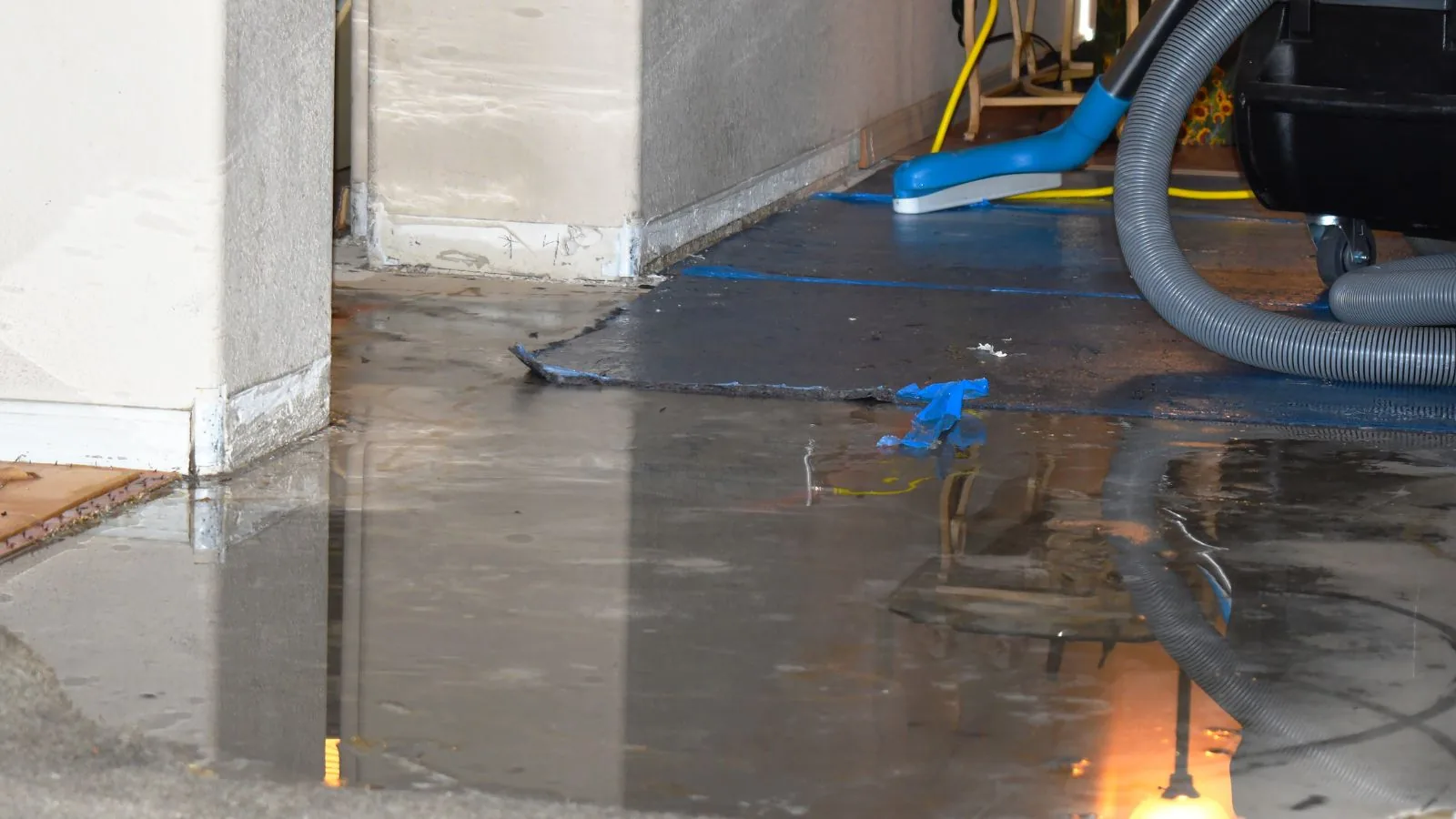
Emergency water extraction means pumping and vacuuming standing water out of floors, carpet, padding and wall cavities with professional equipment. It is the first and most time-sensitive step in water damage restoration, because every hour of contact lets water travel farther into framing and finishes. Our dispatch line is staffed 24/7, and a Greenwich homeowner who calls at 2 a.m. reaches the same line as one who calls at noon.
While you wait, stop the source if you can. Close the main water valve, lift small furniture and electronics off wet floors, and stay out of any room where water touches outlets or a panel. If the panel is dry and reachable, cut power to the affected circuits, and if you are unsure, call the utility or 911 first.
When standing water is an emergency
Call right away when water covers more than a small patch, when it keeps flowing, or when it has reached carpet, hardwood or the base of a wall. Water that sits on a finished floor for a day starts to cup boards, swell baseboards and wick up drywall. Anything that smells like a drain, or that came in from outdoors, should be treated as contaminated.
A single glass of spilled water or a puddle you can mop in minutes does not need a crew. A wet area larger than a bath mat, or any water under flooring, usually does.
What Greenwich housing means for extraction
Census ACS estimates put the median year a home was built at 1957 in ZIP 06830 and 1971 in ZIP 06831. Homes from those decades often have finished basements, plaster or older drywall, and hardwood laid over plank subfloors. Each of those holds water in a different way, so the extraction plan changes room by room.
In Byram, Glenville, Cos Cob and Old Greenwich, lower levels are common and they collect water first. A pump that clears the deepest point is only the start. The crew then works across the floor with vacuum wands so that water trapped in carpet and pad does not wick back up.
How an extraction visit runs
- Stop and secure. The crew confirms the source is off, checks for electrical and gas hazards, and photographs the room before anything moves.
- Pump the deep water. Submersible pumps clear anything standing over an inch or two so that wands can take over.
- Extract from surfaces. Truck-mount or portable extraction units pull water from carpet, pad, tile grout lines and the lower edge of walls.
- Map the moisture. Moisture meters and a thermal camera find wet areas that look dry, including inside walls and under floating floors.
- Hand off to drying. Air movers and dehumidifiers are placed, and daily readings decide when the room is dry. See structural drying and dehumidification for that stage.
Industry reference
The ANSI/IICRC S500 standard calls for removing standing water as soon as possible and identifying the water category before drying begins. Extraction is the first step because it removes the largest volume of water in the shortest time.
What to do before help arrives
- Stop the source if you can do so safely.
- Stay out of standing water near outlets or appliances.
- Lift small items and rugs onto dry surfaces.
- Photograph the water and the damage.
- Call the 24/7 line and describe the source.
Water on the floor right now?
Call the 24/7 line and tell us what you see. We will explain the scope and price before work starts.
Which extraction method fits the material
| Situation | Method | What follows |
|---|---|---|
| Standing water over an inch deep | Submersible pump, then wand extraction | Drying equipment and moisture mapping |
| Saturated wall-to-wall carpet | Weighted or truck-mount extraction, pad lifted | Carpet dried in place or removed, see carpet water damage |
| Wet hardwood or engineered floor | Low-profile extraction and floor drying mats | Moisture checks for cupping, see hardwood floor repair |
| Water that came from a drain or outdoors | Containment first, then extraction with protective gear | Removal of porous materials, see sewage backup cleanup |
Extraction alone is not drying
Pulling the visible water out can remove most of the volume, but it does not dry the materials. Studs, subfloors and insulation hold moisture that only air movement and dehumidification will release. Skipping that stage is the most common reason a floor looks fine for a week and then smells musty.
A shop vacuum from a hardware store is fine for a small spill. It cannot lift water from padding or from under cabinets, and it can pull water through a motor that was never built to handle it.
What affects the cost of water extraction
- Water category. Clean supply water is simpler than gray or contaminated water, which adds protective steps and disposal.
- Area and depth. More square footage and deeper water mean longer pumping and more extraction passes.
- Materials involved. Carpet and pad, hardwood, tile and plaster each need a different method.
- Drying days. Equipment stays until readings reach the dry standard, so the number of days drives the total.
- Rebuild scope. Removed drywall or flooring is repaired separately from the water removal itself.
General note on insurance: sudden and accidental water damage is often covered, while gradual leaks and neglect often are not, and flood is usually excluded without separate flood coverage. Check your policy or ask your insurer. Want your real number? Call (914) 732-9604 and describe what you see.
Questions about water extraction
Yes. The dispatch line answers 24/7, including nights, weekends and holidays. Tell us what you can see, what the source was and whether it has been shut off, and we will explain the plan before work starts.
It depends on how much water there is and what it soaked into. A small wet room can be extracted in a few hours, while a flooded lower level takes longer. Drying afterward runs for days, not hours.
For a small spill, yes. For anything under flooring or inside a wall, a household vacuum will miss most of it. Never use a standard vacuum near standing water that could touch electrical outlets.
Take wide shots of each wet room, close shots of the source and any damaged belongings, and a short video walking through the area. Keep damaged items until your insurer says otherwise.