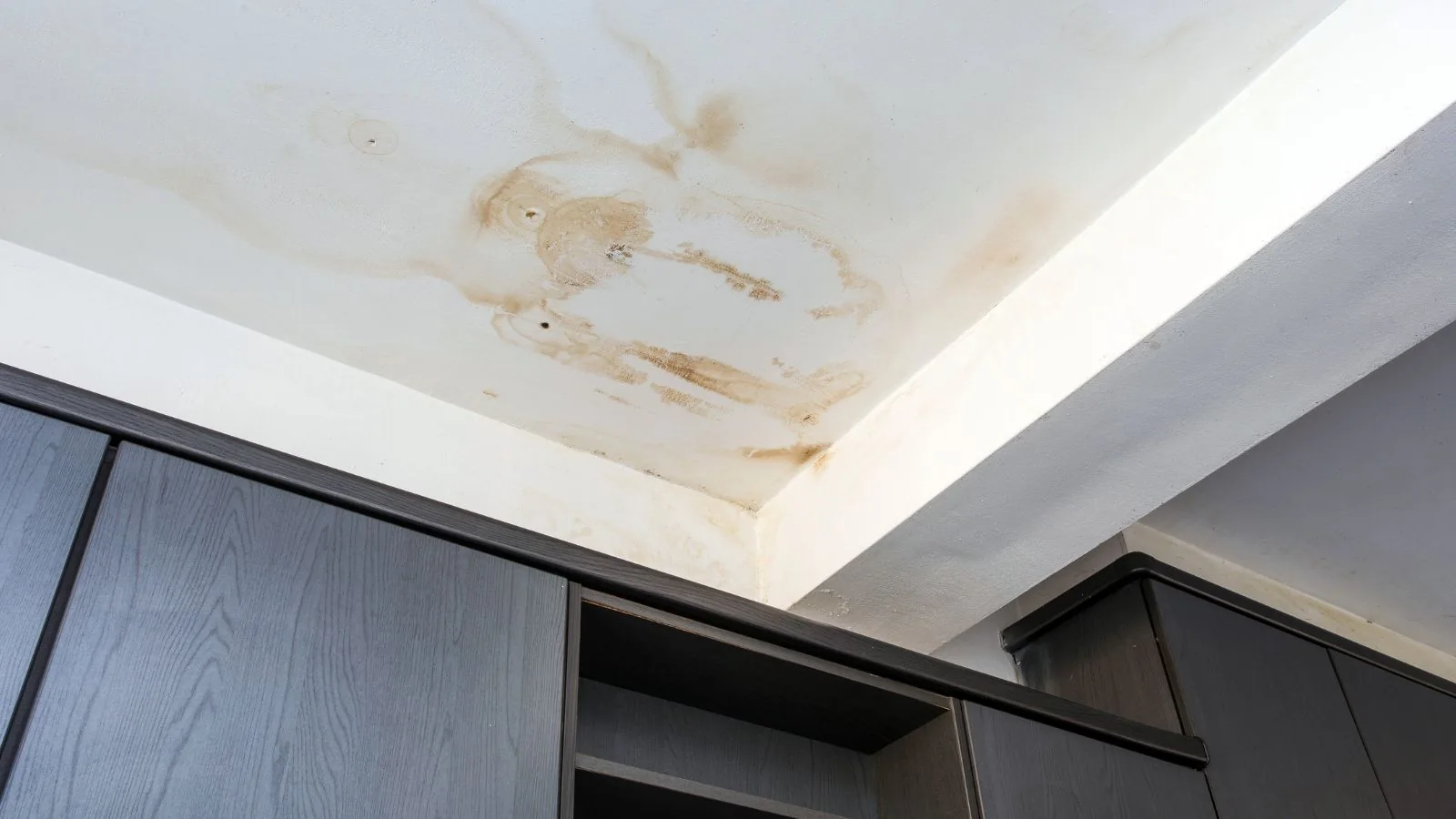
Kitchen water damage restoration is the drying and repair of cabinets, flooring, walls and subfloor after a leak at a sink, dishwasher, refrigerator line or supply connection. Kitchens combine water, cabinets made of layered board and flooring that often runs under everything, so a small leak can reach more material than expected. We take calls for Greenwich kitchens and explain each step before work starts.
Close the shut-off valve under the sink or at the appliance, and empty the cabinet so air can reach the base. Mop up standing water and photograph the cabinet interior, the floor and the source before you move anything else.
Water under the kitchen sink
The cabinet under a sink is the most common place for a kitchen leak to start. Supply lines, drain traps and garbage disposal connections all sit there, and a slow drip can soak the cabinet floor for weeks. A swollen cabinet base, a dark stain or a smell from under the sink usually means the leak has been running.
Open the doors and remove the items. Press on the cabinet base with a finger, because wet particleboard feels soft and can crumble. Take photos before cleanup so your insurer can see the condition.
What gets wet and what gets saved
| Material | Behavior when wet | Usual approach |
|---|---|---|
| Solid wood cabinets | Dries well if caught early | Dry in place, refinish if needed |
| Particleboard or MDF boxes | Swell and weaken | Often replaced at the base |
| Plywood boxes | Tolerate moisture better | Often dried and kept |
| Toe kicks and baseboards | Wick water at the floor | Removed to dry the wall base |
| Flooring under cabinets | Traps moisture | Mapped and dried, sometimes lifted |
Wet flooring is covered in more detail under hardwood floor water damage repair, and appliance-specific leaks appear in appliance leak water damage.
How we dry a kitchen
We extract surface water, remove toe kicks and drawer boxes, and read moisture in cabinet bases, walls and flooring. Air movers dry the cabinet interior and the cavity behind it, and dehumidifiers pull moisture from the room. Thermal imaging helps us find water that traveled under the flooring.
Daily readings show whether cabinets are drying or still holding water. If the base material is not responding, we tell you and give the replacement option instead of drying it indefinitely.
Industry reference
Under the ANSI/IICRC S500 standard, a dishwasher or sink leak is usually clean or gray water at first, and the category can change if water sits. Kitchens hold cabinets, flooring and appliances, so the standard's drying goals are checked material by material.
Kitchen leak under the sink?
Close the valve and call us for moisture readings and drying. We explain scope and price first.
Dry or replace: how to decide
- Dry in place when the board is firm, the finish is intact and readings drop quickly.
- Replace the base when board is swollen, soft or delaminating.
- Replace flooring when it is cupped, delaminating or readings stay high after drying.
- Ask for readings before any rebuild to confirm dryness.
If the leak soaked drywall behind the cabinets, wall and drywall repair covers the next steps. A kitchen above a basement can drip into the ceiling below.
Local note for Greenwich kitchens
Many Greenwich homes were remodeled over the decades, with kitchens updated while the original supply valves and drains stayed in place. Census data lists a median build year of 1957 in ZIP 06830. Old shut-offs seize when turned, so locate yours and test it before an emergency.
We serve kitchens across ZIP codes 06830, 06831 and 06836, and homes near Greenwich Avenue and Cos Cob up to Glenville and Banksville.
What affects the cost
- Cabinet material. Solid wood, plywood and particleboard respond differently.
- Floor type. Hardwood, tile and vinyl dry at different rates.
- How long it leaked. Weeks of seepage reach more material.
- Drying time. Equipment runs until readings are acceptable.
- Rebuild scope. Cabinet and floor replacement are separate from the drying.
General note on insurance: sudden leaks are often covered and long seepage often is not. Photograph the cabinet interior and keep the failed part. Want your real number? Call (914) 732-9604.
Questions about kitchen water damage
Often, if they are solid wood or plywood and the leak is caught early. Particleboard that has swollen usually needs replacing.
Look for cupping, soft spots or a musty smell, and have moisture readings taken. A thermal camera shows wet areas that the eye misses.
Not usually. Countertops stay in place unless the cabinet base under them has to be removed.
Damp cabinets and wall bases can grow mold if they stay wet. Fast drying lowers the risk, and we do not make health claims.