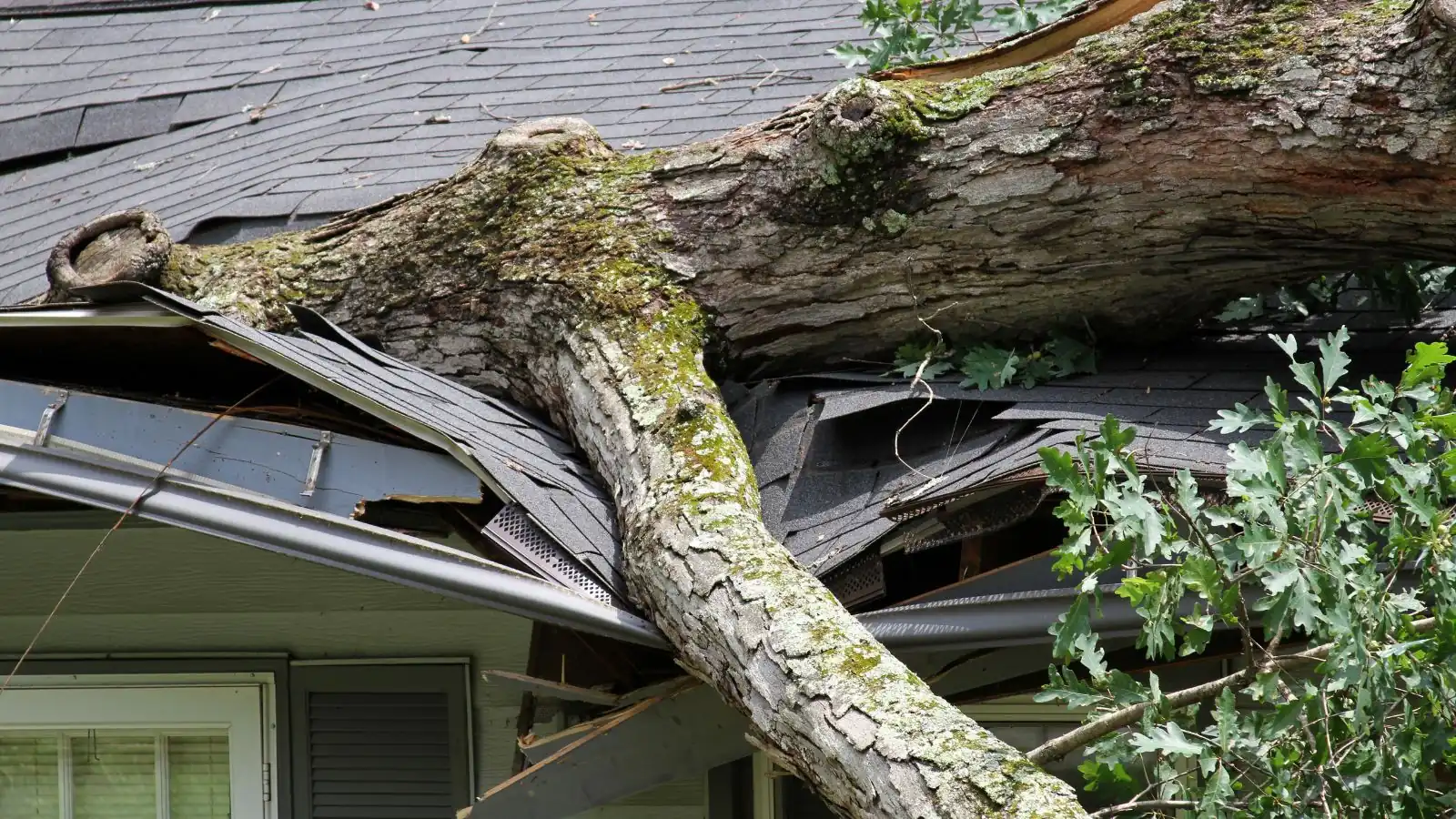
Storm water damage cleanup is the removal and drying of water that enters a building during or after severe weather, through a damaged roof, failed flashing, wind-driven rain at windows or overwhelmed drainage. Storm losses often come with other hazards, such as downed lines and broken limbs, so safety comes first. Our line is open 24/7 for Greenwich callers, including during active storms.
Stay clear of downed power lines and report them to 911. Keep out of rooms with sagging ceilings, and do not walk into standing water if the basement panel could be wet. Put a bucket under drips, move belongings and photograph everything before cleanup.
Storm damage emergency: what to do before cleanup
- Report downed lines, gas smells or fire to 911 before anything else.
- Stay out of rooms with a sagging ceiling or wet panel.
- Move valuables away from wet areas and photograph damage from every angle.
- Cover openings with tarps only if you can do it safely from the ground or inside.
- Call the line when it is safe, and call your insurer promptly.
How storms get water into Greenwich homes
Roof and flashing
Wind lifts shingles and drives rain under them, and a limb can open a hole in minutes.
Windows and doors
Wind-driven rain pushes water past worn seals and into the wall cavity below.
Gutters and grade
Clogged gutters overflow against siding, and poor grade sends runoff toward foundations.
Trees
Mature trees near older homes can drop limbs on roofs and through ceilings.
Connecticut insurance materials still refer to Tropical Storm Irene in 2011 and Hurricane Sandy in 2012 as benchmark storms, and the Town of Greenwich documents Sandy as primarily a coastal event. Coastal surge is a flood claim, covered on our flood damage cleanup page, while rain through the roof is a storm claim.
Cleanup after the storm passes
Crews extract water, remove soaked insulation and ceiling board, and map moisture through the roof deck, attic and walls. A temporary roof cover is arranged by a roofer, and drying starts once the building is closed to rain. Ceilings that have taken water are handled as in ceiling water damage repair.
We do not repair roofs, windows or siding, and we recommend that you keep the roofer's written scope for your insurer. Drying begins as soon as the structure is weather-tight enough that new water will not undo it.
Storm water in the house?
Stay safe and call the 24/7 line. We explain scope and price before work starts.
Storm water versus flood water
| Source | Typical path | Cleanup treatment |
|---|---|---|
| Rain through roof or siding | From above or through walls | Often clean to gray water, insulation and board removed as needed |
| Wind-driven rain at windows | Through seals and sills | Local drying of sill, wall base and floor |
| Surface flood or surge | From outside at grade | Contaminated, protective steps apply |
| Sewer or drain overflow | From plumbing | Category 3, see sewage backup cleanup |
Storm repair decisions
Short exposures to rain often dry in place, while a roof opening that stayed open for days can soak insulation and rot sheathing. A moisture reading tells you which one you have. The sooner the structure is dried, the fewer materials need replacement.
Document the storm date and the weather event in your own notes, and use official weather records for the date when your insurer asks. We use the year only in our records and do not estimate dates.
What affects the cost
- Size of the opening. A small leak versus a large roof breach.
- Time to dry-in. Longer exposure soaks more material.
- Insulation and ceiling board. Wet materials are removed.
- Drying days. Equipment stays until readings are dry.
- Exterior repair. Roofing and siding are separate trades.
General note on insurance: wind and rain damage is often covered under standard policies while flood is usually excluded. Report promptly, photograph damage and keep receipts. Want your real number? Call (914) 732-9604.
Questions about storm water damage
Yes. The 24/7 line takes storm calls at any hour. During a wide event many homes need help, so we explain the sequence when you reach us.
A roofer handles the roof cover. We dry the interior and coordinate drying with the roof work.
Wind and rain damage is often covered, and flood is usually excluded. Check your policy and report promptly.
We can extract and start drying, but new rain can undo the work. We recommend sealing the opening first.