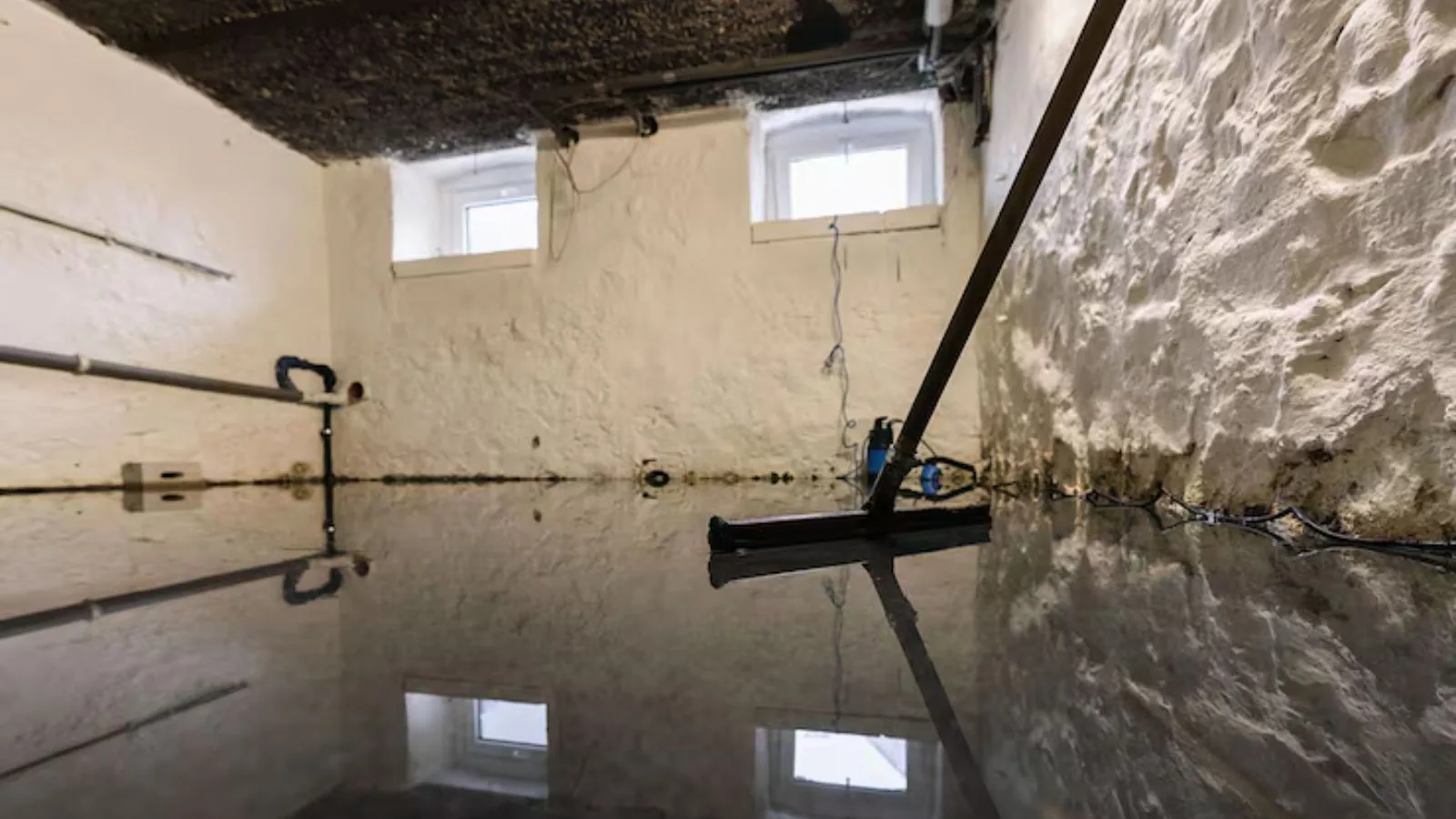
Flood damage restoration is the cleanup and drying of a building after outside water, from storm surge, heavy rain or an overflowing river, enters the structure. Floodwater should be assumed contaminated, which makes it different from a plumbing leak and means protective steps come before anything else. Our line is open 24/7 for Greenwich flood calls.
Stay out of flooded areas until the power and gas are safe. The Town of Greenwich advises turning off the furnace and the gas valve at the appliance, not handling energized electrical equipment in wet areas, and never walking through floodwater.
Flood emergency: what to do before help arrives
- Leave the building if water is rising or if you smell gas.
- Do not touch electrical equipment in wet areas and do not drive through floodwater.
- If water is already in your basement, wait until outside water drops before pumping so the structure is not stressed.
- Photograph damage from the doorway and keep receipts for anything you throw out.
- Call the line when it is safe, and report gas leaks or downed lines to 911.
Why flooding is a real risk in Greenwich
Greenwich sits on Long Island Sound and has the Byram, Mianus and other waterways crossing the town. The Town of Greenwich documents Hurricane Sandy on October 29, 2012, with a high water mark of about 10.2 feet at its coastal measurement, and notes that the surge arrived just after low tide. Its own analysis warns that a five-hour delay would have meant catastrophic flooding.
Neighborhoods such as Old Greenwich, Riverside, Byram and Pemberwick sit near the shore or a river. The town has a Flood and Erosion Control Board, and homeowners can look up their address on the FEMA Flood Map Service Center. We do not quote zones here, so check the map for your property.
Flood versus a plumbing leak
| Question | Plumbing leak | Flood |
|---|---|---|
| Where it comes from | Inside the building | Outside water, storm surge or overflow |
| Water category | Often 1 or 2 | Treated as 3 until shown otherwise |
| Porous materials | Often dried in place | Often removed, see sewage backup cleanup |
| Insurance | Often covered if sudden | Usually excluded without flood coverage |
How a flood cleanup is organized
Crews wear protective gear, extract water in stages, and remove materials that cannot be cleaned, such as soaked carpet, pad, insulation and low drywall. Hard surfaces are cleaned and disinfected. The structure is then dried with air movers and dehumidifiers until readings are acceptable.
Lower levels are the most common target, so see also basement water damage cleanup. Storm-driven water that came through a roof or wall has its own page on storm water damage cleanup.
Flood in the house?
Stay safe, then call the 24/7 line. We explain scope and price before work starts.
Flood insurance is a separate conversation
The Connecticut Insurance Department says standard homeowners policies generally exclude flood and sewer or drain backup, though an endorsement is available. National Flood Insurance Program policies usually carry a 30-day waiting period. The Town of Greenwich also notes a homeowner policy probably does not cover flooding and suggests asking about the National Flood Insurance Program.
Report any claim promptly, photograph damage before discarding items, and keep receipts. Ask your insurer what applies, because we do not decide coverage.
What affects the cost of flood cleanup
- Water category. Floodwater is contaminated, so protective and disposal steps apply.
- Depth and duration. Water that stood longer soaked more of the structure.
- Materials removed. Porous materials that cannot be cleaned are replaced.
- Square footage. More area means more extraction and drying.
- Rebuild scope. Repairs are separate from the cleanup.
Want your real number? Call (914) 732-9604.
Questions about flood damage
Yes. The line is open 24/7. In a widespread storm many people call at once, so we explain the plan and sequence when you reach us.
The Town of Greenwich says floodwater must be assumed contaminated. Wash, rinse and disinfect anything it touched, or discard it.
The town advises waiting until floodwater outside is below basement level before draining it, because pumping too early can stress the structure.
Dry everything fast and ask us about mold remediation if growth appears. Moisture is the cause, so drying is the first defense.