Carpet water damage restoration is the extraction and drying of wet carpet and padding, plus the decision about whether either can be kept. Carpet is a thin top layer over a thick pad that holds water like a sponge, so drying the surface alone leaves the pad wet. The key variables are the water category and how long it sat.
Pull furniture off wet carpet and put foil or blocks under the legs. Do not run a regular vacuum on wet carpet, and avoid walking on it, which pushes water deeper.
Water category decides carpet fate
| Water | Carpet | Pad |
|---|---|---|
| Clean supply water, caught fast | Often saved by extraction and drying | Often dried in place or replaced if saturated |
| Gray water, such as a dishwasher or washer overflow | Case by case, cleaned and treated | Usually replaced |
| Contaminated water, such as sewage or flood | Usually replaced | Replaced |
| Water that sat for days | Replaced if odor or mold appears | Replaced |
Contaminated water is covered under sewage backup cleanup, which explains why carpet there is treated as disposable.
How we dry wet carpet
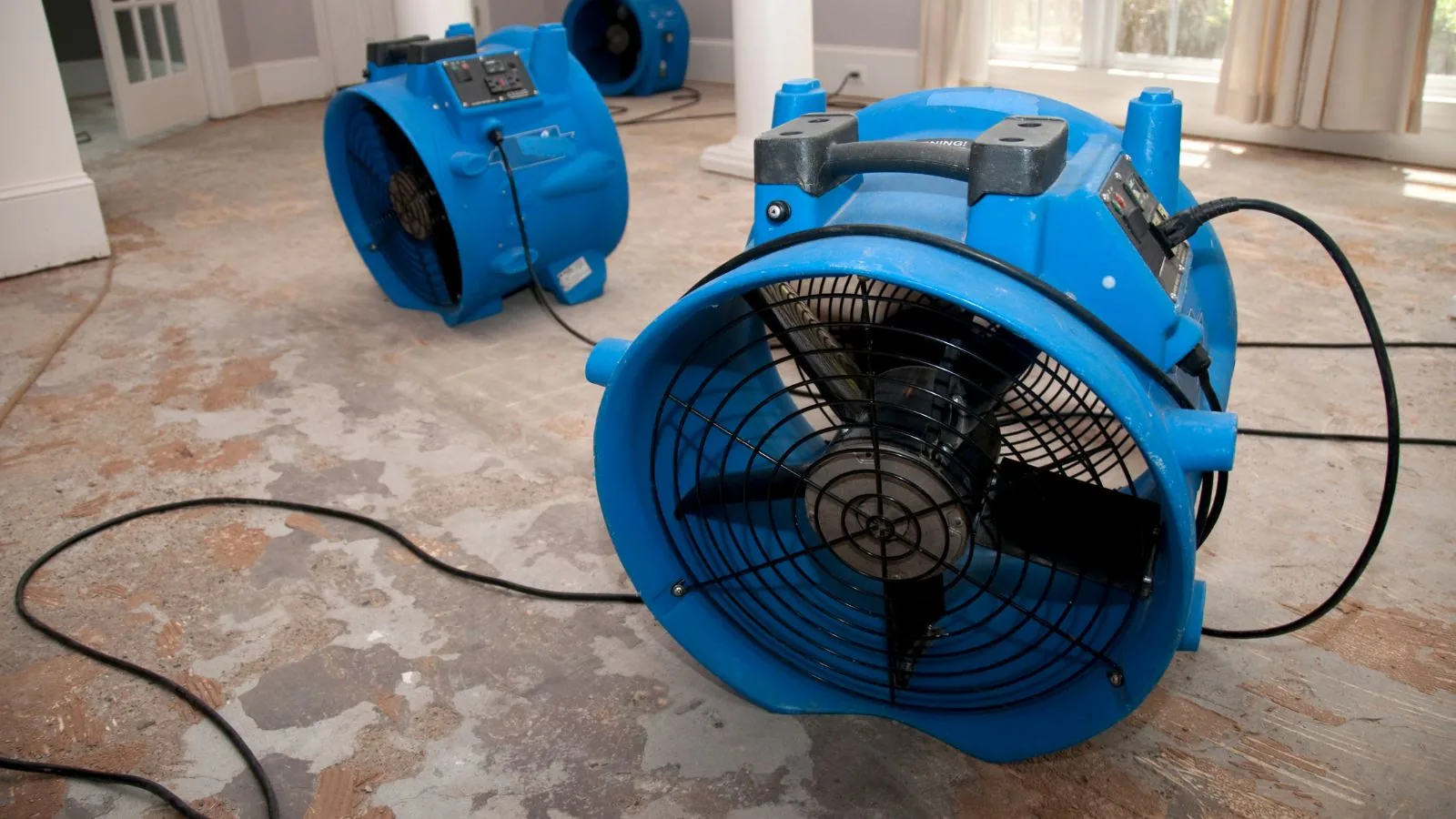
Crews use weighted extraction wands and truck-mount or portable units to remove water from the carpet and pad. The carpet is often lifted at the edge or the pad is peeled back so air can reach the subfloor. Air movers blow across the surface and dehumidifiers remove the moisture from the room.
Moisture readings on the subfloor and wall base tell us when the area is dry. We do not leave equipment to run without readings, because wet pad and subfloor can mold even when the surface feels fine.
Industry reference
The ANSI/IICRC S500 standard treats carpet and cushion differently by water category. Clean-water carpet can often be dried in place, while carpet exposed to contaminated water is generally removed.
What to do and what not to do
- Do lift furniture legs off wet carpet or place foil under them.
- Do open windows and run fans if the water was clean.
- Do not walk on wet carpet more than needed.
- Do not use a household vacuum on standing water.
- Do not leave wet carpet in place for days.
Carpet soaked?
Call for extraction and a drying plan. We explain scope and price before work starts.
Mold in carpet after water damage
Carpet and pad that stay wet for more than a short time can grow mold, and the smell is often the first sign. Fast drying is the best defense. If growth shows or the smell persists after drying, a closer look at the pad and subfloor is needed.
We make no health claims. For visible growth, see mold remediation, which follows the ANSI/IICRC S520 standard.
Greenwich notes on carpet and basements
Wall-to-wall carpet is common in finished lower levels and bedrooms across Greenwich, and many of those rooms sit over concrete or plank subfloors that hold moisture. Census data gives a median build year of 1957 in ZIP 06830, so original subfloors and older tack strips are part of the picture.
Water in a basement carpet is often a flood or sump issue, which is covered in basement water damage cleanup.
Save or replace: a quick guide
- Save carpet when water was clean, it was removed quickly and it dries to normal readings.
- Replace pad in most water events, since it is cheaper than carpet and hard to dry.
- Replace carpet when it has been exposed to contaminated water, has delaminated or smells after drying.
- Ask for readings before laying new pad.
What affects the cost
- Water category. Clean water is simpler than contaminated water.
- Area. More square feet need more extraction and drying.
- Pad and carpet type. Replacement cost depends on what is installed.
- Drying days. Equipment runs until readings are dry.
- Subfloor. Plywood and concrete dry at different rates.
General note on insurance: sudden events are often covered while neglected leaks often are not. Photograph the carpet and keep a sample. Want your real number? Call (914) 732-9604.
Questions about carpet water damage
Often, when the water is clean and removed within a short time. The pad is more likely to be replaced than the carpet.
Moisture meters and a thermal camera show it. The surface can feel dry while the pad is soaked.
The pad or subfloor may still hold moisture. We recheck readings and may recommend replacing the pad.
We handle extraction, drying and removal. Carpet installers install the new carpet after the structure is dry.