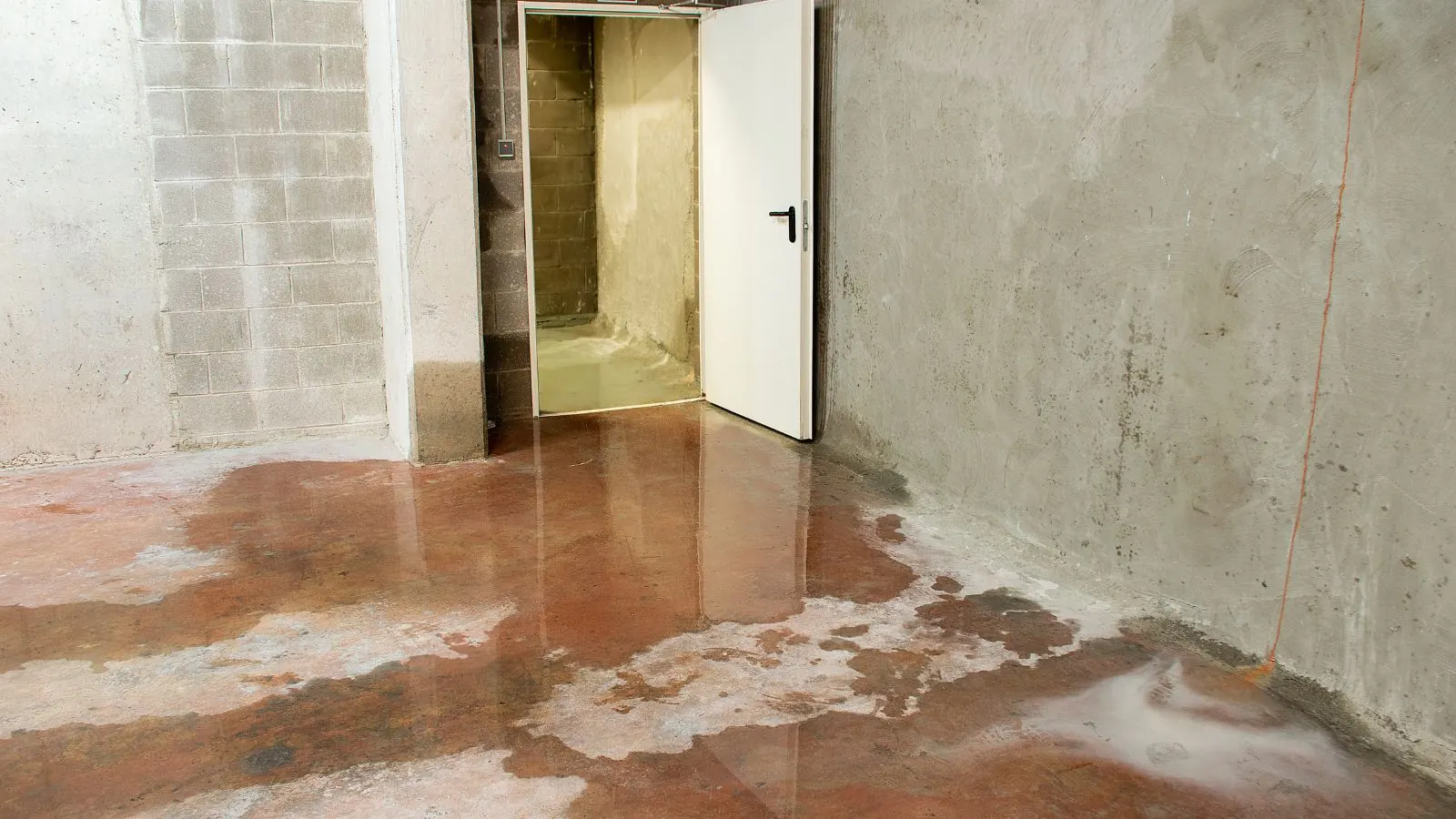
Slab leak water damage is the wet flooring, wall base and subfloor that follow when a pressurized water line under a concrete slab begins to leak. The water has nowhere to go but up through cracks and joints or sideways under finished floors. Our line takes emergency calls 24/7 for Greenwich homes and businesses.
Close the main water valve if you hear running water with every fixture off, or if a floor is visibly wet. Then call a plumber who can pinpoint the leak, and call us for the water cleanup. Do not walk on a floor that is actively wet near outlets.
Warm floor, hissing sound or a water bill that keeps climbing?
Those are the three symptoms people usually report before anyone says the words slab leak. A warm patch on the floor suggests a hot-water line leaking below. A hiss or running sound with everything off suggests a pressurized pipe, and a bill that climbs with no change in use is a quiet warning.
When more than one of these appears, the likely cause is a leak under the slab or in a wall. The work that follows has two halves. A plumber finds and fixes the leak, and our crew dries the structure the water already reached.
Slab leak emergency: what to do tonight
- Shut the main water valve and confirm every fixture is off.
- Check the water meter. If it is still moving with all fixtures off, a hidden leak is likely.
- Keep furniture and rugs off any warm or wet patch.
- Photograph the area and note when you first noticed it.
- Call a plumber for leak detection and call the line for water cleanup.
How common are slab foundations in Greenwich
We do not claim a local frequency here. Many Greenwich homes sit over basements, and slab-on-grade floors usually appear in additions, garages, some lower levels and a share of mid-century construction. Census housing data lists a median year built of 1957 in ZIP 06830, which is the era when copper lines under slabs were common.
If your home has a slab floor or a slab addition, treat unexplained moisture as a reason to check. If it has a full basement and no slab, a hidden leak is more likely to be in a wall or the ceiling below a bathroom, and burst pipe cleanup may be the better page.
Finding the leak and drying the damage
- Locate. A plumber uses acoustic listening, thermal imaging or tracer gas to find the leak under the slab.
- Repair. Options include breaking into the slab for a spot repair or rerouting the line through walls or ceilings.
- Extract and map. We remove surface water and map moisture across the floor, wall base and nearby rooms.
- Dry. Air movers and dehumidifiers dry the flooring, subfloor and the base of walls until readings are acceptable.
Suspect a slab leak?
Call the 24/7 line for the water cleanup side while a plumber locates the leak.
Slab leak repair options and trade-offs
| Option | Pros | Cons |
|---|---|---|
| Spot repair through the slab | Targets the exact leak, preserves the rest of the line | Breaks concrete and finished floor, needs patching |
| Reroute through walls or ceiling | Avoids the slab entirely | More invasive in the home, longer project |
| Full repipe | Replaces aging lines in one project | Highest cost and disruption |
Whichever option you choose, ask for a moisture check before the new floor goes in. Flooring that covers damp concrete or subfloor often fails and can trap moisture. See structural drying and dehumidification for how readings guide the schedule.
What affects the cost
- Leak location. Under the main living area versus a closet or garage.
- Time of the leak. Months of seepage soak more of the slab and subfloor.
- Flooring type. Tile, hardwood, laminate and carpet respond differently.
- Drying days. Equipment runs until readings meet the dry standard.
- Repair scope. Slab repair and flooring are separate from the water work.
General note on insurance: many policies treat sudden water damage differently from long-term leakage, and some limit coverage for the plumbing itself. Check your policy and ask your insurer. Want your real number? Call (914) 732-9604.
Questions about slab leak damage
That pattern often points to a hot-water line leaking under or inside the floor. A plumber can confirm with listening and thermal tools, and we handle the water damage once the source is found.
Yes. The line takes emergency calls 24/7. If you hear running water or see a wet floor, close the main valve and call.
Leak detection is a plumber's job. We handle the extraction, moisture mapping and drying that follow.
It depends on materials and how long water sat. Concrete and subfloors dry slowly, so we measure and do not guess.