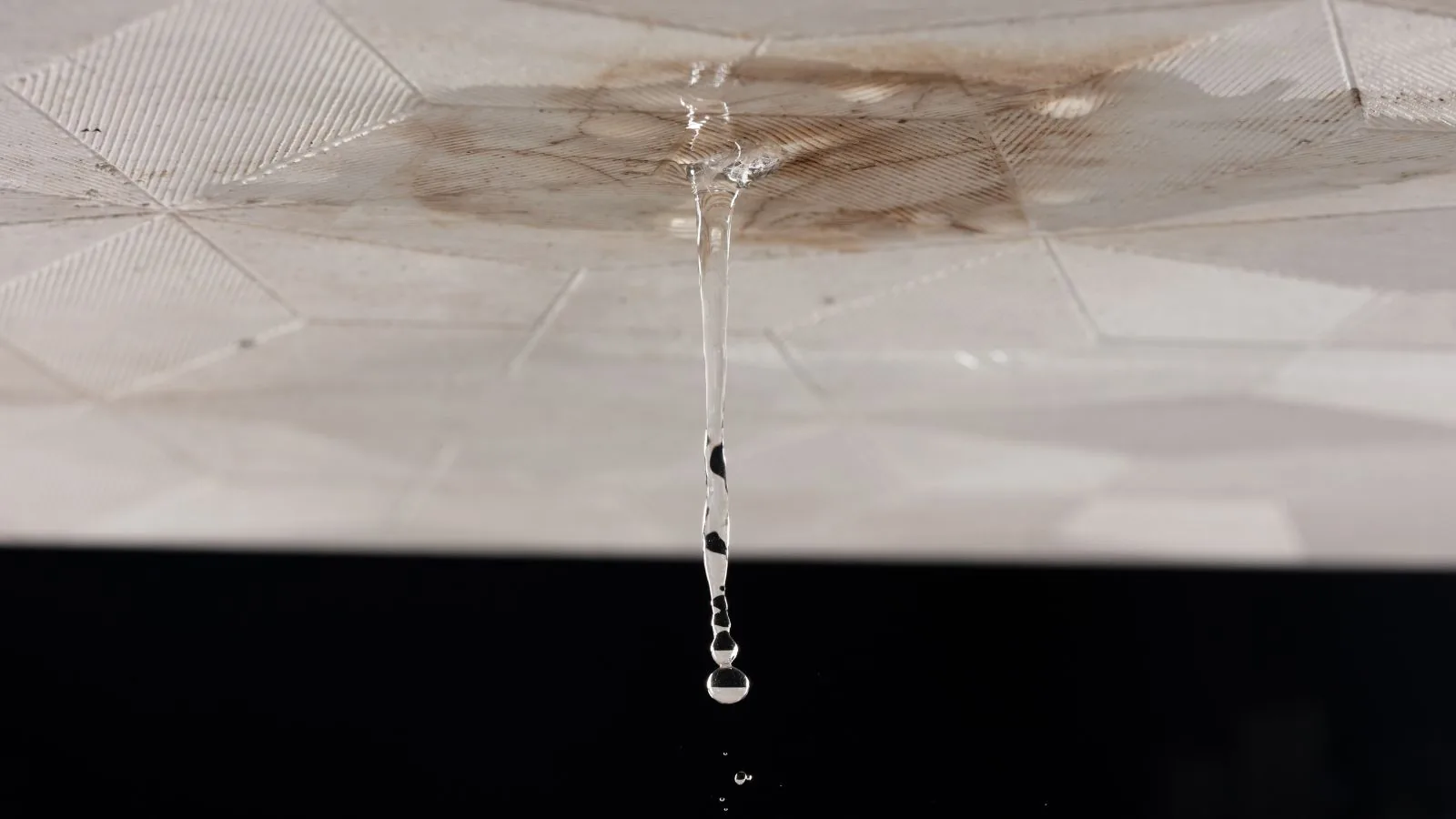
Ceiling water damage repair covers the drying and fixing of drywall, plaster and insulation that water has soaked from above, whether the source is a plumbing line, an upstairs fixture or a roof leak. A sagging or bulging ceiling is an emergency because trapped water can drop all at once and the weight can bring the board down. Our line is open 24/7 for Greenwich callers.
Keep people out from under the bulge. If it is safe, poke a small hole at the lowest point to let the water drain into a bucket, and move furniture away. Turn off the lights and any fan on the wet circuit unless you can reach the panel while standing on dry ground.
Ceiling emergency: when to act immediately
Call right away if the ceiling is sagging, dripping steadily or stained in a spreading ring. Any water near a light fixture or a smoke detector is also a reason to move fast. Water in a ceiling cavity runs along joists and can show up several feet away from the true source.
A faint brown ring that has not grown in weeks may be old. Even then, a moisture reading tells you whether anything is still wet. Old stains that are dry can be primed and painted, while wet ones cannot.
Finding the source above the stain
Plumbing overhead
A bathroom, laundry or kitchen above the ceiling is the most common source. Supply lines, drain connections and shower pans all leak on a schedule of their own.
Roof or flashing
Water that follows the underside of the deck may enter at a chimney, vent or valley and show up at the ceiling far from the entry point.
HVAC condensate
An air handler in an attic or closet can overflow into the ceiling below, see AC leak water damage.
Condensation and ice
Warm moist air meeting a cold roof deck can drip back down during a winter thaw.
How the cavity gets dried and the board gets repaired
Technicians scan the ceiling with a thermal camera and read moisture with a pin meter. Wet insulation is removed and sagging drywall is cut out so the cavity is open to air. Air movers and dehumidifiers then dry the joists and the remaining board.
Small stains that read dry are sealed and painted. Larger wet sections are cut to the nearest framing and replaced, and plaster ceilings need a separate decision because they are heavier and harder to patch cleanly. For long runs of wet cavity, structural drying sets the schedule.
Industry reference
The ANSI/IICRC S500 standard treats water that has run through ceiling cavities and insulation with extra care, because it can pick up dust, debris and microbes on the way down. That is why wet insulation is usually removed rather than dried in place.
What to do before help arrives
- Stay out of rooms with a sagging or bulging ceiling.
- Poke a small drain hole only if you can do so safely and place a bucket.
- Turn off power to the area if water is near fixtures.
- Move furniture and valuables away from the leak.
- Call a roofer or plumber for the source.
Ceiling sagging or dripping?
Keep clear of it and call the 24/7 line. We explain scope and price before work starts.
Roof leaks that show up as ceiling damage
Roof leak water damage is the ceiling and attic damage that follows when rain, melting snow or ice-dam water gets past shingles, flashing or a vent boot. The stain on the ceiling is often a feet-long trail from the real entry point, because water runs along rafters and the deck before it drips.
We handle the interior side, which means extraction, insulation removal, drying and ceiling repair. A roofer must fix the opening, and until that happens the next storm can wet the same cavity again. If you can reach the attic safely, photograph wet insulation and any visible daylight.
Ask your roofer to document the repair in writing, because your insurer may ask for it. We can dry the structure on the same day a tarp goes on if the weather allows, and we coordinate drying around the roof work.
Repair or replace the ceiling
| Condition | Usual approach | Why |
|---|---|---|
| Stain, board is dry and firm | Seal and paint | No wet material remains |
| Board is soft, bubbled or sagging | Cut out and replace | Wet gypsum loses strength and can mold |
| Wet insulation above | Remove and replace | Matted insulation does not dry reliably |
| Plaster ceiling, wet | Dry and test, patch or re-skim | Weight and keying make removal a bigger job |
If the water also ran down a wall, wall and drywall repair covers the next step.
What affects the cost of ceiling repair
- Water category. Clean supply water versus roof or drain water changes the cleanup steps.
- Size of the wet area. A single stain versus a whole room of board.
- Ceiling type. Smooth drywall, textured finish or plaster each repair differently.
- Insulation and framing. Removal and drying time for the cavity above.
- Paint and finish. Matching a texture or a high ceiling adds work.
General note on insurance: sudden leaks are often covered while repeated seepage and neglect often are not. Photograph the ceiling and the attic and check your policy. Want your real number? Call (914) 732-9604.
Questions about ceiling water damage
Yes. The line is open 24/7. A ceiling that is bulging at night is a real hazard, so call and we will talk through making the area safe while we plan.
Piercing a small hole at the lowest point can release water in a controlled stream, but stand clear and use a bucket. Do not do it under a light fixture or near wiring.
No, a roofer repairs the roof. We dry and restore the interior and can schedule drying around the roof work.
Not if the board is dry and the source is fixed. Stains bleed through paint when moisture remains, so a stain-blocking primer helps only after drying.