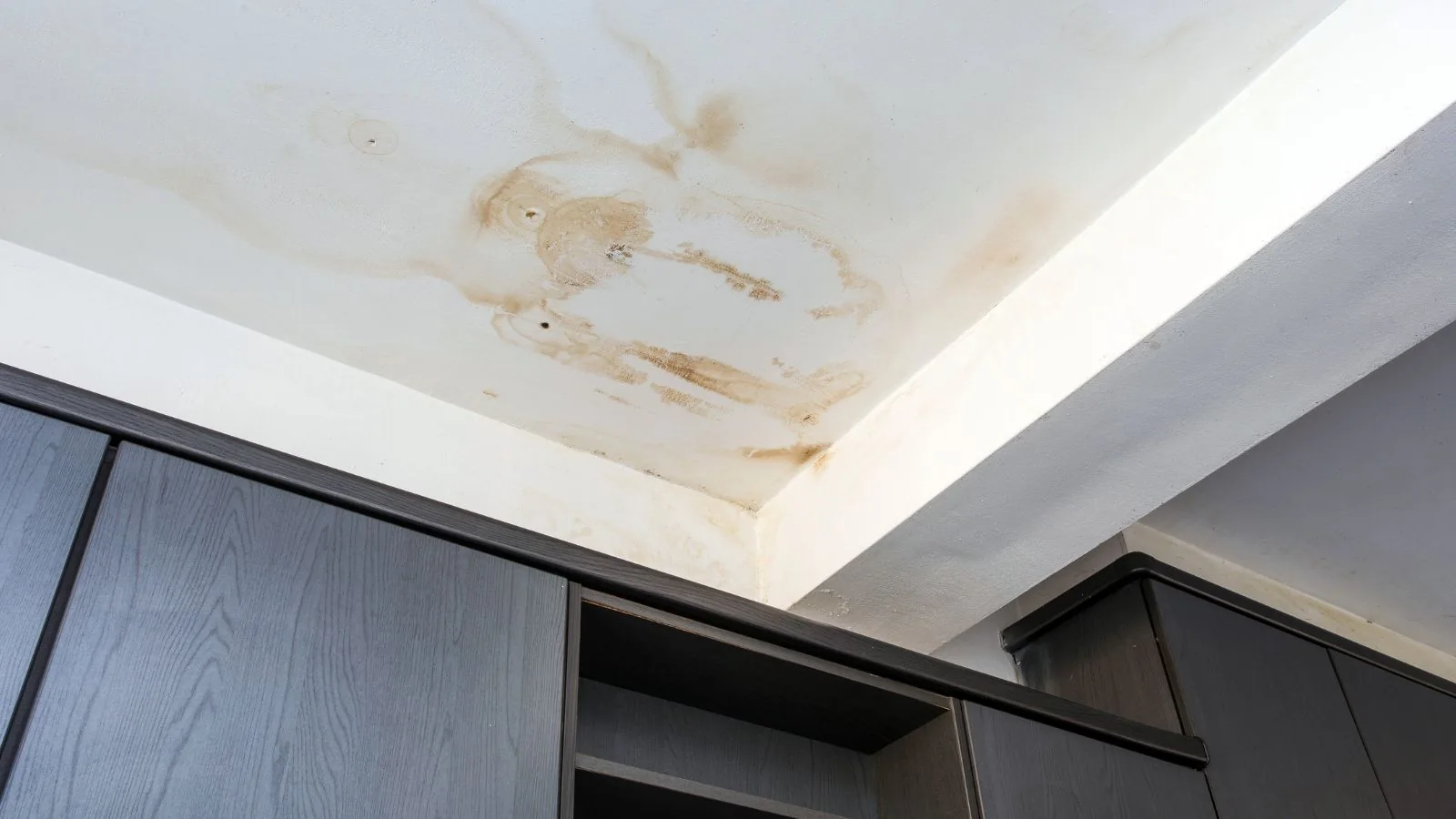
Water damage in a house you plan to sell raises two questions. Should you repair it first, and what do you have to tell buyers?
This is general information and not legal advice. A Connecticut real estate attorney and your agent can advise on your specific sale.
What Connecticut asks sellers to disclose
Connecticut's Uniform Property Condition Disclosure Act, Section 20-327b of the General Statutes, requires sellers of residential property of four units or fewer to give buyers a written condition report. The form asks about the property's systems and known problems, including water and moisture issues.
A seller who does not provide the report owes the buyer a $500 credit at closing under Section 20-327c. The credit does not excuse a seller from disclosing a defect that falls within the statute and the seller actually knows about.
Repair first or sell as is
| Choice | Advantages | Trade-offs |
|---|---|---|
| Repair before listing | Fewer objections, cleaner inspection report | Upfront cost and time |
| Sell as is with disclosure | No repair delay | Buyers may discount price or ask for credits |
| Partial repair | Fix safety and moisture issues, leave cosmetics | Needs clear records of what was done |
No option is universally right. A house with an active leak or mold usually benefits from a repair of the cause before listing. A closed-up cosmetic stain from an old, fixed leak may be better disclosed and left alone.
Records that help a sale
- Photographs of the damage and the repair.
- The plumber's invoice for the source repair.
- Moisture logs showing drying to a dry standard.
- Receipts for removed and replaced materials.
- Permits and final inspections for rebuild work, where applicable.
- Any clearance or post-work report you chose to obtain.
A buyer who can see that the cause was fixed and the structure dried is usually calmer than one who finds a stain with no explanation.
Inspections and buyer concerns
Buyer inspectors use moisture meters and thermal cameras, so hidden dampness can surface during a home inspection. Fixing the source and drying the structure before listing avoids a surprise that could reopen negotiations.
If mold was part of the problem, the Connecticut Department of Public Health does not license mold contractors, so keep records of the remediation standard used. Our mold remediation page explains how documented work is done.
How buyers and lenders see water history
Buyers worry most about two things. Is the problem fixed, and could it come back? Records answer both. A plumber's invoice shows the source was repaired, and moisture logs show the structure dried.
Lenders and insurers may also ask. A buyer who needs flood insurance can face higher cost if the property has a flood history, so be ready for those questions and answer them accurately.
Pricing the decision
Ask your agent how comparable homes with and without repairs have sold. In some markets, buyers pay full price for a repaired house and discount heavily for one with open problems. In others, they prefer to fix things themselves.
Whatever you choose, keep every receipt and photograph in one folder. It makes the listing, the inspection and the closing easier to handle.
- Get a written estimate for repairs before you decide.
- Ask your agent how recent sales compare.
- Confirm with an attorney what the disclosure form asks.
- Keep documentation ready to share with serious buyers.
Timing also matters. If you plan to list in spring, a repair finished in winter leaves time for the structure to prove itself through a few weather cycles. A fresh repair with no history of dryness invites more questions than one that has stayed dry for several months.
Finally, be consistent. What you say on the disclosure form, what your agent says in the listing and what your documents show should all match. Inconsistency is what makes buyers nervous, and a calm, accurate paper trail is what keeps a sale on track after the inspection.
Preparing a house to list?
Call the 24/7 line. We document moisture readings from first visit to dry standard.
Talk to the right people
Your agent knows what buyers in your price range expect. A real estate attorney can explain what the disclosure form requires for your situation. Your insurer can tell you whether repair costs from a prior claim affect anything.
If you need drying and records before an inspection, our structural drying page describes the process.
The Greenwich market and moisture
Greenwich buyers often bring thorough inspectors, and many homes have finished lower levels where water history matters. A documented repair can help more than an undocumented fix, especially when a house has stood through coastal storms.
If you are selling near the shore in Greens Farms or in a river-adjacent part of Stamford, expect buyers to ask about flood history and flood insurance as well.
A Greenwich question
The condition report asks about known water and moisture problems. Answer it truthfully and consult your attorney about what applies to your sale.
If a source is active or mold is present, fix it first. For old, resolved and cosmetic damage, disclosure with records may be enough.
Yes, but you should disclose what you know and address the moisture source. Buyers and lenders may ask for documentation of remediation.
Still have a question about your situation? Call the 24/7 line at (914) 732-9604 and describe what you see.