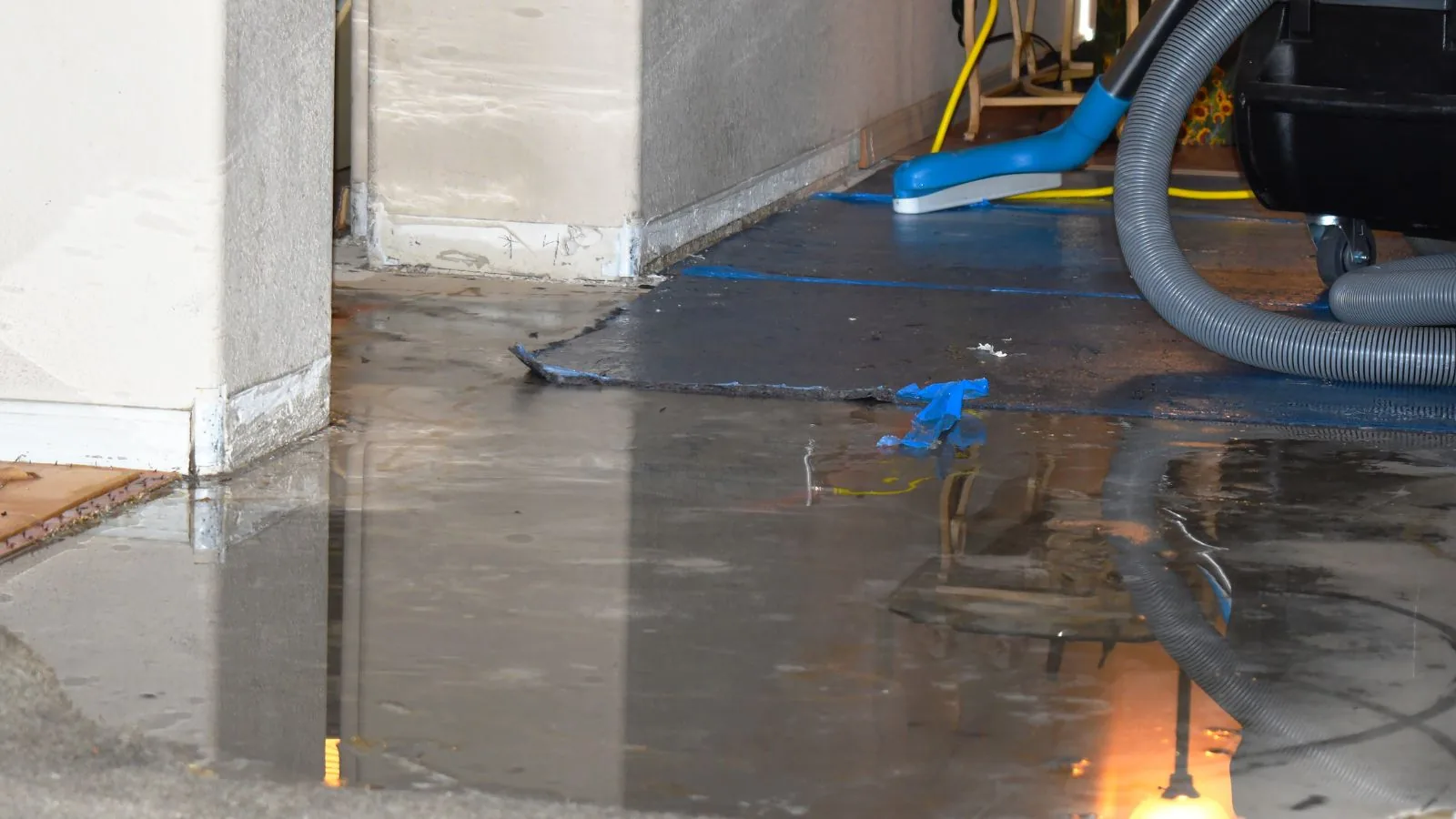
A water damage assessment is the careful look at a wet property that comes before any demolition or equipment. It answers three questions. Where did the water come from, how contaminated is it, and how much of the structure is wet?
Knowing what to expect helps you prepare the space and ask the right questions when the crew arrives.
Safety and source first
The crew starts by confirming that the source is stopped and the area is safe. That means checking for live electrical hazards, unstable ceilings and standing water that touches outlets. If a supply line is still leaking, the main is closed before anything else.
The source also tells the crew what kind of water is present. A supply line is different from a toilet overflow, and both differ from floodwater.
Water categories
| Category | Source examples | Why it matters |
|---|---|---|
| Category 1 | Broken supply line, clean water | Dries in place if handled quickly |
| Category 2 | Washing machine or dishwasher discharge | Some materials may need removal |
| Category 3 | Sewage, flood or storm water | Porous materials are removed and areas disinfected |
Clean water that sits for days can degrade into a worse category. That is why speed matters and why the assessment notes how long the water has been present.
Measuring the extent
The crew uses moisture meters and a thermal camera to outline the wet area. This is called moisture mapping, and it is the backbone of a drying plan. Readings are taken on floors, walls, ceilings and in cabinets.
The result is a drawn map of the wet area, plus a list of affected materials such as hardwood, carpet, drywall or insulation.
What you receive
- The source and cause as the crew observed them.
- The water category and how it affects materials.
- A list of rooms and materials affected.
- A written scope of drying work and removal.
- An explanation of price before work begins.
How to prepare for the visit
Move small valuables and electronics out of the wet area if you can do so safely. Leave damaged items where they are if you plan to photograph them for an insurer. Tell the crew about any previous leaks in the same spot.
Have the policy number handy if you plan to file a claim. See our water extraction page for what follows the assessment.
Ask for the scope in writing
A written scope lists what will be removed, what will be dried in place and which equipment will run. It helps you compare it with an insurer's estimate and prevents surprises later.
What an assessment is not
An assessment is not a mold test and not a structural engineering report. If the crew sees signs of structural damage, they will tell you to bring in the appropriate professional. If the water has been present long enough that mold is likely, our mold remediation page explains the separate process.
Signs the assessment should look harder
Some clues suggest water has traveled farther than the visible stain. A musty smell without a wet spot, paint that bubbles in a different room, a floor that feels slightly soft or a baseboard that has pulled away can all point to hidden moisture.
When the crew sees these, they take extra readings along the path water would follow. Water usually moves downhill and along framing, so the real source is often above or beside the visible damage.
Questions worth asking the crew
- What category of water is this, and how do you know?
- Which materials will be dried and which removed?
- How many days of drying do you expect?
- What will you do if readings do not improve?
- Who is responsible for the plumbing repair?
A good crew answers these plainly and puts the plan in writing. If you hear only a total price without a scope, ask for the detail before you agree.
Keep notes of your own after the visit. Write down the readings you were shown, the materials marked for removal and the days the crew expects to return. Those notes make it easy to check progress and to explain the work to an insurer later.
If something changes, such as a new stain or a smell that comes back, call the crew right away rather than waiting for the next scheduled visit. Hidden moisture is easier to correct in the first days than after it has spread into more material.
The categories in the ANSI/IICRC S500 standard for professional water damage restoration are the backbone of the assessment, because they decide how water is handled.
Ready for an assessment?
Call the 24/7 line. We explain scope and price before work starts.
Assessing water in Greenwich homes
Greenwich has many large houses with finished basements, multiple bathrooms above living space and long runs of piping. A leak on the second floor can travel through two levels before it shows up, so the assessment often follows water from the stain back to the source.
In Stamford condos and apartments, shared risers mean the assessment includes neighboring units and building management. In Greens Farms, tide and storm water raise the category question right away.
A Greenwich question
A typical house takes an hour or two on site, depending on how many rooms are wet. Larger or multi-level losses take longer.
Sometimes a small inspection hole is needed. Meters and thermal imaging answer most questions without opening anything.
The assessment gathers facts. The written scope and price follow from it, and we explain both before work starts.
Still have a question about your situation? Call the 24/7 line at (914) 732-9604 and describe what you see.