People ask what kills mold permanently as if there were a magic liquid. There is not. Mold spores are in ordinary indoor air, and they grow whenever a damp organic surface gives them a place to settle.
A permanent result comes from three things in order. Stop the water, remove or clean the growth and keep the space dry.
Why sprays alone fail
A spray may darken or lighten a stain on the surface, but it rarely reaches mold that has grown into porous material. If the drywall or wood stays damp, new growth follows. This is why a bathroom wall can look clean for two weeks and then turn spotty again.
The EPA does not recommend routine biocide use as a substitute for cleaning and moisture control. Killing mold without removing it also leaves dead spores and fragments behind.
What works, in order
- Stop the water. Repair the leak, fix drainage or seal the entry point. Nothing else matters until this is done.
- Dry the area. Use fans and dehumidifiers until materials reach dry readings.
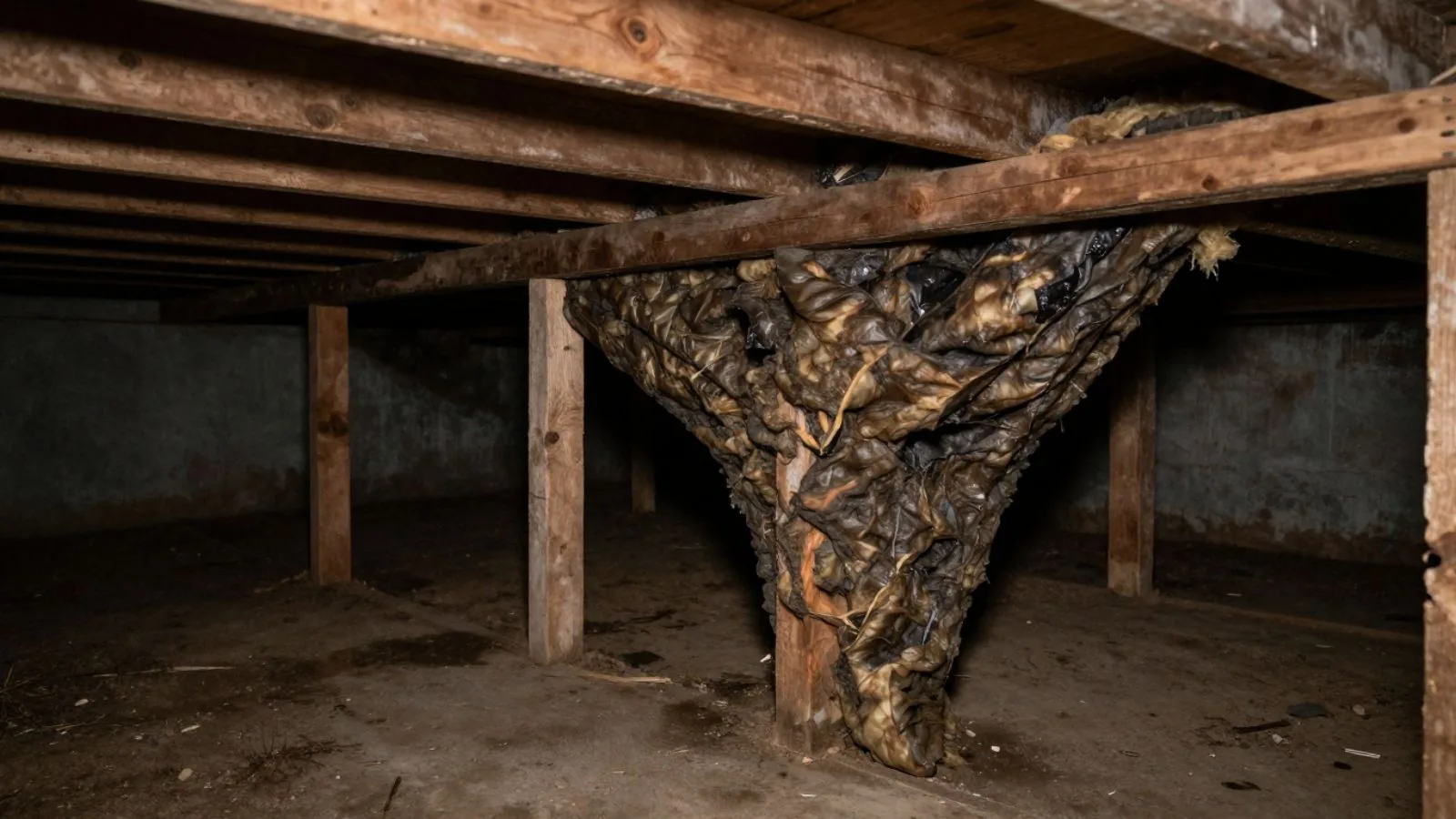
- Remove porous material. Drywall, insulation, ceiling tile and carpet with mold are cut out and bagged.
- Clean what remains. Scrub hard surfaces and framing with detergent and water, then dry.
- Control humidity. Keep indoor humidity in the low range recommended for homes.
What works on which surface
| Surface | Usual approach | Reason |
|---|---|---|
| Tile, glass, metal | Detergent, water, scrub and dry | Nonporous, so mold stays on top |
| Painted drywall | Remove if mold penetrates | Paper facing holds mold |
| Framing lumber | Clean, sand or treat as directed, then dry | Wood can often be saved |
| Insulation | Remove and replace | Cannot be cleaned effectively |
| Carpet and pad | Remove | Porous and hard to dry thoroughly |
The pattern is simple. Hard and sealed surfaces can be cleaned, and porous materials that are moldy are replaced. Our mold remediation service follows this logic with containment so cleaning does not scatter spores.
Humidity is the long-term control
The EPA advises keeping indoor humidity between about 30 and 60 percent, and lower is easier to maintain in summer. A small hygrometer costs little and tells you when a basement or bathroom is drifting high.
Dehumidifiers, bathroom and kitchen exhaust fans, clear gutters and soil sloped away from the foundation all help. A damp crawl space may call for a dedicated drying approach, which our crawl space water damage page discusses.
Dead mold is still a problem
Dead or dried mold can still trigger allergic reactions in some people. That is why removal and cleaning are preferred over simply killing growth in place.
When mold keeps coming back
Repeated mold is almost always a moisture message. A pipe may weep inside a wall, a roof may leak at a flashing or a basement may take on groundwater after every storm. Treat the cause rather than the symptom.
If you are not sure where the water is entering, a moisture survey with meters and a thermal camera can find it without cutting into every wall.
Natural products and what they can do
Vinegar, hydrogen peroxide and tea tree oil are often mentioned online. On a small, hard surface they may help clean a stain. None of them dries a wall, and none removes the mold that has grown into wood or paper.
The honest comparison is between cleaning a surface and fixing a cause. Products belong in the first category and never replace the second.
Signs the job is truly finished
- No musty smell after the room is closed up for a day.
- Moisture readings match the dry reference.
- No new spotting appears over several weeks.
- Humidity stays in a comfortable range.
A small hygrometer in the basement, bathroom and crawl space access gives you an early warning. When readings climb for several days, run the dehumidifier, check gutters and look for a new leak before anything has a chance to grow.
Cold basement walls in summer are a frequent trouble spot, because warm humid air meets a cool surface and leaves moisture behind. Insulating the wall, running a dehumidifier and keeping furniture a few inches off the surface all reduce that effect. Look for the pattern in your own house before spending money on products.
What not to do with mold
- Do not mix bleach with ammonia or other cleaners.
- Do not paint over mold.
- Do not sweep or dry brush mold into the air.
- Do not ignore the moisture source.
- Do not cut into walls before you know how far it goes.
Mold you cannot get rid of?
Call the 24/7 line. We find the moisture and explain the plan before work starts.
Connecticut guidance on mold
The Connecticut Department of Public Health says the state does not license mold contractors, and it points owners to the S520 standard for guidance. It also says air sampling is usually not needed to decide whether to act on visible mold.
The Department of Consumer Protection has a separate designation for residential mold remediators that calls for NORMI or IICRC certification. If you are comparing companies in Georgetown or Weston, ask which standard the crew follows.
A Greenwich question
It may treat a small hard surface, but it cannot dry a damp wall or remove growth inside porous materials. The moisture still has to be fixed.
It slows growth by lowering humidity, but it does not remove existing mold. Use it after cleaning or removal to keep the space dry.
No. Small patches on hard surfaces can be cleaned by the owner. Mold in walls, large areas or recurring growth call for professional work.
Still have a question about your situation? Call the 24/7 line at (914) 732-9604 and describe what you see.